
Rolex
How to Sell a Rolex Daytona in Australia: What to Check Before You Accept an Offer
Identify the reference and generation, tell a Zenith-powered Daytona from an in-house one, test the chronograph the way a buyer will, and verify the buyer's licence before you accept an offer in Australia.
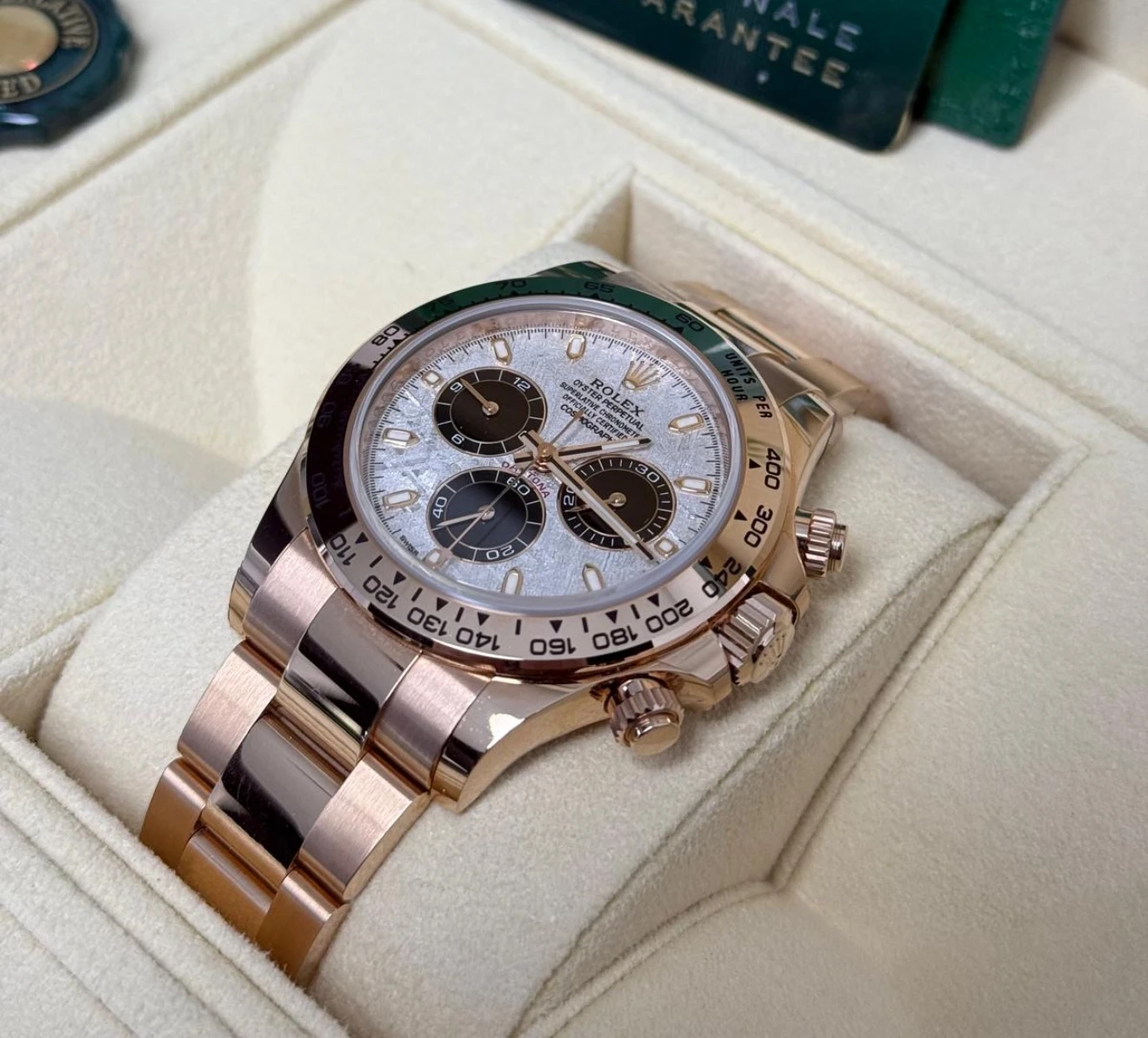
The short answer: the Cosmograph Daytona is the Rolex where the movement inside decides most of the conversation, because the family splits into a Zenith-powered era and an in-house era that look alike across a room and are assessed very differently. Before you accept an offer, read the reference between the lugs, work out which generation and calibre you hold, establish what documents come with it, test the chronograph properly, and verify that the buyer is a licensed second-hand dealer whose licence you can look up. Almost everything that moves a Daytona offer is something you can check yourself before you send a single photograph.
Summary
The Daytona is the Rolex most often asked about in Australia and the one where sellers most often describe the watch incorrectly, because two steel chronographs with the same dial colour can be separated by twelve years, two calibres and a completely different bezel material. This guide is organised the way a buyer works through one: reference and generation first, then the Zenith versus in-house question, then documents, then the physical checks that are specific to a chronograph, then the buyer, then payment and the law that governs the transaction. It is written by a business that buys Daytonas, so it has an obvious interest in you selling yours to us, and that is disclosed here rather than buried. Every claim in it is checkable against the sources at the end regardless of who you sell to.
Key takeaways
- The reference number, not the word "Daytona", is what a buyer assesses. It is engraved between the lugs at 12 o'clock, and it fixes the generation, the metal and the bezel in one go.
- The dividing line collectors care about is 2000, when the Zenith-based calibre 4030 gave way to Rolex's first in-house chronograph, the calibre 4130. On the earlier watch the running seconds sit at 9 o'clock; on the later one they do not.
- Rolex moved the steel Daytona to a black Cerachrom bezel in 2016 with the 116500LN, and to the calibre 4131 in 2023 with the 126500LN.
- A Daytona is a chronograph, so a buyer tests it as one: pushers screwed down and unscrewing cleanly, start, stop, and a reset that returns all three hands to exactly zero.
- Sub-dial alignment, bezel condition and the tachymeter scale are checked closely, and a bezel or bracelet swapped from another reference is a deduction even when the part is genuine Rolex.
- Most steel Daytonas presented with their warranty card sit comfortably above Buy Your Watch's $20,000 purchase minimum, so the threshold is rarely the question on this model that it is on a Datejust.
- A licensed dealer must ask for your identification and record the serial number. That is the Second-Hand Dealers and Pawnbrokers Act 1989 (Vic), not distrust.
Who this guide is for
Someone in Australia who owns a Rolex Cosmograph Daytona of any generation, is considering selling it, and wants to understand what a serious buyer will look at before that buyer does. It assumes you have the watch in hand and can photograph it. It does not give prices, because a figure quoted on a Daytona without the reference, the documents and an inspection is a guess dressed up as a fact.
How this guide was prepared
Reference numbers, production years, calibres and movement details were checked on 15 September 2026 against independent reference histories and against release coverage from watch publications that handled the watches. Where two sources gave different years for a handover, this guide says "about" and says so in the text. Where a figure could not be confirmed against a source we read, it has been left out rather than hedged. The legal position is Victorian, because Buy Your Watch holds its licence in Victoria, and each statutory claim names the section it comes from. Nothing here is legal, financial or tax advice.
The Rolex Daytona at a glance
The table below covers the Daytona generations a buyer in Australia most often sees. Years are the introduction and discontinuation years given by the reference histories cited here; where two sources differ, the range is shown. [1] [2]
| Reference | Years | Case | Bezel | Calibre | What sets it apart |
|---|---|---|---|---|---|
| 16520 | 1988 to 2000 | 40 mm steel | Steel, engraved tachymeter | 4030 | The "Zenith" Daytona. Calibre 4030 is a heavily modified Zenith El Primero 400 running at 28,800 vibrations per hour, with no date, running seconds at 9 o'clock, screw-down pushers and a sapphire crystal. [3] |
| 116520 | 2000 to 2016 | 40 mm steel | Steel, engraved tachymeter | 4130 | Rolex's first in-house automatic chronograph, built around a column wheel and a vertical clutch, with 44 jewels. [4] |
| 116500LN | 2016 to about 2023 | 40 mm steel | Black Cerachrom | 4130 | The first steel Daytona with a ceramic bezel. Black dial with silver-coloured rings, or white lacquer with black rings. [5] |
| 126500LN | 2023 onward | 40 mm steel | Black Cerachrom | 4131 | The current steel Daytona, introduced across the range for the model's sixtieth anniversary. [2] |
| Gold, Rolesor and platinum, calibre 4130 era | about 2000 to 2023 | 40 mm | Metal or Cerachrom | 4130 | The platinum 116506 of 2013 marked the model's fiftieth anniversary, with an ice blue dial and a brown ceramic bezel. [6] From 2017 the gold ceramic references 116515LN in Everose, 116518LN in yellow gold and 116519LN in white gold came on the Oysterflex bracelet. [7] Reference lists also record 116503, 116505, 116508 and 116509 in this generation. [1] |
| Gold, Rolesor and platinum, calibre 4131 era | 2023 onward | 40 mm | Metal or Cerachrom | 4131 | 126503 in yellow Rolesor, 126505 in Everose, 126506 in platinum and 126518LN in yellow gold. [2] Reference lists also record 126508 and 126509 in this generation. [1] |
| 126529LN "Le Mans" | 2023 | 40 mm white gold | Black Cerachrom | 4132 | Made for the centenary of the 24 Hours of Le Mans. The calibre 4132 is a reworked 4131 that doubles the range of the chronograph counter, the sub-dial at 9 o'clock is a 24-hour totaliser, and a red "100" sits on the tachymeter scale. [8] |
| 126502 "Rolesium" | 2026 | 40 mm Oystersteel with platinum | Anthracite ceramic with platinum edging | 4131 | Shown at Watches and Wonders 2026. A white grand feu enamel dial and, for the first time on a steel Daytona, a sapphire display back. An off-catalogue model rather than a regular production one. [9] |
Across the modern range the Daytona is a 40 mm case rated to 100 metres of water resistance. [5] The calibre 4130 carries 72 hours of power reserve, [4] and the calibre 4131 that replaced it in 2023 carries the same 72 hours from a single barrel. [2] Note that some secondary write-ups give a lower figure for the 4130; the 72-hour figure is the one the movement references we checked state, and it is what a buyer will work from. Rolex certifies its current watches to its own Superlative Chronometer standard of minus 2 to plus 2 seconds a day, tested on the assembled watch rather than the bare movement. [10]
Identify the exact reference and generation before you ask for a price
The reference is engraved between the lugs at 12 o'clock. On watches from about 2007 the serial is engraved on the rehaut, the inner ring around the dial, at 6 o'clock; on older watches it sits between the lugs at 6. Our guide to Rolex serial and reference numbers shows where each sits and what the serial says about the year.
On a Daytona the reference does two jobs. The leading digits give the generation: 16 for the Zenith era, 116 for the first in-house era, and 126 for the generation introduced in 2023. The trailing digits give the metal, and the letters after them give the bezel, which is why LN appears on the black ceramic references. "A steel Daytona with a black bezel" therefore describes a 116500LN and a 126500LN equally well, and those are different watches with different movements. Read the engraving, write it down exactly, and use it in every message you send a buyer.
Work out whether yours is a Zenith Daytona or an in-house Daytona
This is the single most useful thing a Daytona owner can establish, and it takes a few seconds. Between 1988 and 2000 the automatic Daytona ran on the calibre 4030, a Zenith El Primero 400 that Rolex modified heavily, with the running seconds sub-dial at 9 o'clock and no date. [3] From 2000 the 116520 introduced the calibre 4130, the first chronograph movement Rolex made in-house, with a column wheel, a vertical clutch and a layout that moved the running seconds. [4]
Look at your dial. If the small seconds hand is ticking away at 9 o'clock, you are almost certainly holding a Zenith-era watch, and the reference between the lugs will confirm it. The distinction matters to a buyer because the two eras are traded by different people for different reasons, and because the Zenith watches are now a collector subject in their own right, with dial variations that specialists study closely. Describe which one you have accurately and let the buyer assess it. Do not attempt to work out a figure from a dial variation you read about online, and be wary of anyone who offers you one before seeing the watch.
Establish what you actually have: the watch, the papers, or the full set
Lay out everything that came with the watch and describe it exactly. Five items carry weight, in roughly this order.
- The warranty card or guarantee certificate. A card whose reference and serial match the watch is the most valuable document you hold, and on a Daytona it is what settles any question about which generation and bezel the watch left Rolex with.
- Service records. More relevant on a Zenith-era Daytona than on a 2023 watch, because a chronograph that has not been serviced in two decades will need attention, and a buyer prices that in.
- The original receipt. Establishes provenance and is the document to keep if a tax question ever arises.
- Spare links, or the second strap. On gold references supplied on the Oysterflex bracelet there may be nothing to count; on a metal bracelet, sizing removes links and buyers notice when they are missing.
- The box. Nice to have, least weighted of the five.
Plenty of Daytonas are offered to us as the watch alone, and that is a normal sale. Describe a watch-only Daytona as watch only. The offer you are given on an accurate description is the offer you are paid.
Read the warranty card, because it dates the watch
The guarantee document itself is a dating tool, and its format should be consistent with the reference and the serial. Rolex issued a paper guarantee up to late 2006 and moved to a plastic card from around the end of that year; the international guarantee was extended from two years to five years for watches sold from 1 July 2015; and in 2020 the card was redesigned with an embedded chip activated by the retailer at the point of sale. [11] A 2021 Daytona presented with a paper certificate, or a 1995 Daytona with a chipped card, is a mismatch worth asking about before anything else is discussed.
Understand why two Daytonas of the same reference draw different offers
Once the reference is settled, the differences that remain are physical, and they are all things you can inspect yourself.
The bezel and its tachymeter
Three kinds of bezel run through the family: engraved metal on the steel references up to 2016, black Cerachrom ceramic from the 116500LN onward, and precious metal or coloured ceramic on the gold and platinum references. [5] [6] A metal bezel shows its wear in the tachymeter engraving, where the scale softens with polishing and the numerals lose their crispness. A ceramic bezel barely marks but can chip on a hard knock. Either way, an original bezel is what a buyer wants, and a bezel taken from another reference reads as a replaced part even when it is genuine.
The pushers and the crown
The Daytona's chronograph pushers screw down, which is part of how the case achieves its water resistance. [3] They should unscrew smoothly, operate with a positive action, and screw back down without crossing the thread. Pushers that feel gritty or will not seat are a service item, and a buyer will treat them as one.
The sub-dials and the dial
Look at the three sub-dials straight on. Their printed rings should sit concentric with the dial and their hands should rest exactly on zero when the chronograph is reset. Misaligned sub-dial hands are common on watches that have been knocked or poorly serviced, and they are one of the first things an assessor checks. Lume plots that have aged evenly are fine; one plot a different colour suggests a replaced marker. Text that is slightly off-register, or a dial colour that was never offered on your reference, reads as a replaced dial.
The bracelet or the Oysterflex
Steel Daytonas come on an Oyster bracelet, and the clasp code and end links should match the watch. On the gold ceramic references from 2017 the fitment may be the Oysterflex, a high-performance elastomer moulded over a flexible metal blade. [7] An Oysterflex is a wearing part and shows its age at the flex points, so check it honestly and photograph it rather than describing it as new.
The case
Sharp edges between the brushed and polished surfaces mean an unpolished case. Rounded lugs and thinned pusher guards mean the watch has been polished repeatedly, which removes metal and which buyers price in.
Check the watch the way a buyer will
- Unscrew the crown and wind. It should wind smoothly and screw back down cleanly. Set the time and let the watch run.
- Test the chronograph properly. Unscrew both pushers. Start the chronograph with the top pusher and watch the central seconds hand sweep. Stop it. Start and stop it again. Then press the lower pusher and confirm that all three chronograph hands, the central seconds and both counters, return to exactly zero. A hand that stops just short or just past zero is a fault, not a quirk.
- Run it for a while. The vertical clutch in the in-house calibres is designed to run the chronograph for long periods, so leaving it running does no harm and lets you see whether the counters advance correctly. [4]
- Read the engraving. Reference between the lugs at 12, serial on the rehaut or between the lugs at 6, and both matched against the card.
- Inspect the bezel. Tachymeter numerals crisp or softened, ceramic free of chips, the bezel type consistent with the reference.
- Check the sub-dials under a loupe for alignment, print quality and any sign of a refinished surface.
- Test the bracelet. Hold it by the clasp and let the watch hang, check the clasp closes positively, and confirm the end links sit flush against the case.
- Photograph everything in daylight: dial straight on, case sides, lugs from above, pushers and crown, bezel, clasp open and closed, rehaut, case engraving, and every document. Send the card serial to your chosen buyer only.
Our guide to how to tell if a Rolex is real covers the authentication checks in depth, and our condition grading guide explains what the grades a buyer uses actually mean.
Verify the buyer, not just the offer
- Licence number, looked up. Second-hand dealing is licensed state by state; in Victoria under the Second-Hand Dealers and Pawnbrokers Act 1989. Buy Your Watch's number is SHD-0017882, issued by Consumer Affairs Victoria.
- ABN on ABN Lookup, matching the licence name and the account the money comes from. Ours is 85 670 502 315.
- Who authenticates. Buy Your Watch uses certified watchmakers in every Australian capital city; they are partner businesses, not our own premises, and that is stated plainly rather than implied.
- A written offer, conditional on authentication, with a timeframe attached.
- Reviews with the dates showing. Ours is 4.9 from 64 Google reviews.
Want a written offer on your Daytona? Send the reference from between the lugs, a few photographs and a note of what documents you hold. We reply with a written figure conditional on authentication, and the whole process takes 24 to 48 hours from submission to payment.
Know what a licensed dealer must record, and what payment should look like
Sellers are sometimes surprised to be asked for photo identification by the business buying their watch. In Victoria the dealer has no choice. Section 19 of the Second-Hand Dealers and Pawnbrokers Act 1989 requires a second-hand dealer or pawnbroker to require every person selling or pawning goods to produce evidence of identity, and to refuse the goods if that evidence is not produced. [12] Section 20 and the record-keeping regulations made under the Act require the dealer to record an accurate description of the goods including any identifying mark or number, the identifying number the dealer assigns, and the seller's full name, address and identification details. [13] On a Daytona that means the serial number is written down. A buyer who does not ask for your licence or passport is either not licensed or not following the law they are licensed under, and neither is the buyer for a watch worth this much.
Payment from a licensed dealer is a bank transfer to an account in your name, made after authentication. Once authenticated by our certified watchmakers, payment is sent by Osko bank transfer, which typically lands in minutes once sent. The entire process takes 24 to 48 hours from submission to payment. Treat any departure from that sequence as a warning: gift cards, cryptocurrency, a cheque drawn on an overseas account, or a courier who will bring the cash are not how a licensed Australian dealer pays for a watch, and no legitimate buyer asks you to pay anything up front for insurance, authentication or a release fee. If you post the watch, use a service that insures it for its full value and requires a signature, and photograph the watch and its serial in the packaging before you seal it.
The tax question, briefly
Whether selling a Daytona has a tax consequence depends on whether you made a gain and on which category of asset the Australian Taxation Office puts the watch in. Most used watches sell for less than they cost, in which case there is no gain to tax. Where there is a gain, the category decides what applies, and anyone quoting you a confident threshold without knowing your circumstances is guessing. We set out the categories, the sections they come from and the record-keeping rule in our guide to the paperwork, the law and the tax question. Keep the original receipt and the record of the sale for at least five years, and for advice you can rely on, use a registered tax agent.
Compare offers like with like
Three offers on the same Daytona are only comparable if all three were made on the same information and on the same terms. Before you compare the figures, check that each buyer:
- quoted on the same reference, with the same description of the documents and the condition;
- put the offer in writing, conditional on the same authentication step;
- pays by bank transfer, not by cheque, store credit or a consignment arrangement where you are paid only if and when the watch sells on;
- covers postage and insurance, or tells you plainly that you do;
- gave a timeframe, because an offer with no date attached can be withdrawn the day the market moves.
Consignment deserves a specific mention on this model, because the Daytona is the Rolex most often put to a consignor or an auction house. It can produce a strong result, but you carry the risk: the watch leaves your possession, you are paid only on sale, and the fee comes off the top. Compare a consignment estimate against a firm purchase offer only after subtracting the fee and discounting for the chance the watch does not sell inside the time you have. Our guide to where to sell a watch in Australia sets the routes side by side.
Common mistakes that cost Daytona sellers money
- Describing the watch by dial colour instead of reference. "Steel Daytona, black dial" spans three generations and two calibres. Read the engraving.
- Not knowing which movement is inside. The Zenith and in-house eras are assessed differently, and getting it wrong in your first message costs you credibility with the buyer.
- Leaving the pushers unscrewed. The case is only sealed with them screwed down, and a Daytona worn that way is a Daytona that has been exposed to moisture.
- Assuming a chronograph fault will not be noticed. A reset that does not return to zero is found in the first minute of an inspection. Disclose it and the offer accounts for it; hide it and the offer is withdrawn.
- Polishing the case before selling. It removes metal, softens the pusher guards and the lug edges, and tells the buyer the watch has been prepared. Clean it with a soft cloth and warm water, nothing more.
- Swapping a bezel or bracelet to "match". A part from another reference is a deduction even when it is genuine Rolex.
- Sending the serial number to every enquiry. Send it to the buyer you have chosen.
- Accepting a verbal offer, or one with no condition and no timeframe stated.
If you would rather keep the watch
Selling is not the only way to release the value in a Daytona. A pawn loan lets you borrow against the watch for a fixed term and take it back when the loan is repaid, with the watch held as the security. Buy Your Watch offers this under the same Victorian licence, with a minimum advance of $15,000 over terms of 3 to 12 months, a $400 setup fee, interest of 4% to 10% per month depending on assessment, and a maximum annual percentage rate of 131%. If you are weighing the two, our guide to selling your watch or borrowing against it sets the options side by side, how to pawn a Rolex in Australia walks through the process for a Rolex specifically, and what happens if you cannot repay a watch loan covers the position on default.
What Buy Your Watch buys, and how it works
Founded in Melbourne in 2023, Buy Your Watch Pty Ltd has purchased more than 1,000 watches, holds second-hand dealer and pawnbroker licence SHD-0017882, and buys from every state. We buy watches valued at $20,000 and above, across Rolex, Patek Philippe, Audemars Piguet, Richard Mille, Cartier, Vacheron Constantin and F.P. Journe. On the Daytona that threshold is less of a live question than it is on some other Rolex families, because a steel Daytona presented with its card generally sits well clear of it, as do the gold, Rolesor and platinum references. Send the reference and photographs and you will be told plainly within 24 to 48 hours whether it is a watch we can make an offer on. If yours is a Submariner rather than a Daytona, our Submariner guide covers that model in the same detail, and the Datejust guide does the same for the Datejust.
Pre-sale checklist
- Reference read from between the lugs at 12 and written down exactly, letters included
- Serial read from the rehaut or between the lugs at 6 and matched to the card
- Generation and calibre established, and the Zenith or in-house question settled from the reference and the sub-dial layout
- Documents laid out and described exactly: card, service records, receipt, links or second strap, box
- Card format consistent with the reference and the year
- Chronograph tested: start, stop, and reset returning all three hands to exactly zero
- Pushers unscrewed, operated and screwed back down cleanly
- Crown unscrewed, wound and screwed back down
- Bezel checked for type, wear to the tachymeter engraving, and any chip on ceramic
- Sub-dials checked under a loupe for alignment and print
- Case checked for polishing, bracelet or Oysterflex checked and photographed as it is
- Photographs taken in daylight of every angle and every document
- Buyer's licence number looked up on the state register, ABN checked and matched to the paying account
- Written offer received, conditional on authentication, with a timeframe
- Payment method confirmed as bank transfer to an account in your name
- Watch sent insured for full value, signature on delivery, serial photographed in the packaging
This is general information, not legal, financial or tax advice. Where it states a legal position it names the statute and section, checked against the sources listed below on 15 September 2026. Reference data, calibres and production years were checked against the same sources on the same date, and figures that could not be confirmed against a source we read have been left out.
Frequently Asked Questions
How do I know which Rolex Daytona I have?
Read the reference engraved between the lugs at 12 o'clock. The leading digits give the generation: 16 for the Zenith era, 116 for the first in-house era, and 126 for the generation introduced in 2023. The trailing digits give the metal, and letters such as LN indicate the bezel. Compare the reference against the serial on the rehaut or between the lugs at 6 o'clock, and against your warranty card.
What is a Zenith Daytona and how do I tell if mine is one?
Between 1988 and 2000 the automatic Daytona, reference 16520, ran on the calibre 4030, a Zenith El Primero 400 that Rolex modified heavily. It beats at 28,800 vibrations per hour, has no date, and places the running seconds sub-dial at 9 o'clock. From 2000 the reference 116520 introduced Rolex's own calibre 4130. If your small seconds hand sits at 9 o'clock, check the reference between the lugs, because you are most likely holding a Zenith-era watch.
What is the difference between a 116500LN and a 126500LN?
Both are 40 mm steel Daytonas with a black Cerachrom bezel, which is why they are confused. The 116500LN ran from 2016 and uses the calibre 4130. The 126500LN arrived in 2023 with the calibre 4131, an evolution of the 4130 with the Chronergy escapement, introduced across the range for the model's sixtieth anniversary. Both carry 72 hours of power reserve. Use the reference rather than the appearance.
What does a buyer check on a Daytona chronograph?
That the pushers unscrew smoothly, operate with a positive action and screw back down without crossing the thread; that the chronograph starts and stops cleanly; and above all that pressing the reset returns the central seconds hand and both counter hands to exactly zero. A hand that stops short of zero or past it is a fault and a buyer will find it in the first minute of an inspection. Sub-dial alignment and the condition of the tachymeter scale are checked at the same time.
Does Buy Your Watch buy Rolex Daytonas?
Yes. We buy watches valued at $20,000 and above, and on the Daytona that threshold is less often the question than it is on some other Rolex families, because a steel Daytona presented with its warranty card generally sits well clear of it, as do the gold, Rolesor and platinum references. Send the reference and photographs and you will be told plainly within 24 to 48 hours whether it is a watch we can make an offer on.
Does a Daytona without box and papers still sell?
Yes. A watch-only Daytona is a normal sale. The warranty card matters most, because it settles which generation, metal and bezel the watch left Rolex with, and the box matters least. Describe exactly what you hold rather than optimistically, and the offer you receive on that description is the offer you are paid.
Should I service or polish my Daytona before selling it?
Do not polish it. Polishing removes metal and softens the lug edges and pusher guards, which buyers read as a watch that has been prepared. A service is a different question: on a Zenith-era Daytona that has not been serviced in many years, a buyer will price the work in either way, so there is rarely an advantage in paying for it yourself first. Clean the watch with a soft cloth and warm water and sell it as it is.
What is the Rolesium Daytona reference 126502?
A Cosmograph Daytona shown at Watches and Wonders 2026 that pairs an Oystersteel case with platinum, under the name Rolesium. It has a white grand feu enamel dial, an anthracite ceramic bezel with polished platinum edging, the calibre 4131 with 72 hours of power reserve, 100 metres of water resistance, and the first sapphire display back fitted to a steel Daytona. It is an off-catalogue model rather than a regular production one.
Why does a watch buyer ask for my ID?
Because section 19 of the Second-Hand Dealers and Pawnbrokers Act 1989 (Vic) requires a licensed second-hand dealer or pawnbroker to require every person selling or pawning goods to produce evidence of identity, and to refuse the goods if it is not produced. Section 20 and the record-keeping regulations require the dealer to record a description of the goods including any identifying number, the seller's name and address, and the identification details. A buyer who does not ask is the one to be wary of.
How is payment made when you sell a Daytona to a dealer?
By bank transfer to an account in your name after the watch has been authenticated. Once authenticated by our certified watchmakers, Buy Your Watch pays by Osko bank transfer, which typically lands in minutes once sent, and the entire process takes 24 to 48 hours from submission to payment. Gift cards, cryptocurrency, cheques drawn on overseas accounts and couriers bringing cash are not how a licensed Australian dealer pays for a watch.
Sources and references
- All Rolex Daytona references, 1963 to 2026, WristBuzz
- Introducing the 2023 Rolex Daytona collection, with transparent back, Monochrome Watches
- Rolex Zenith Daytona dial guide, reference 16520, Bob's Watches
- Rolex calibre 4130 complete guide, Millenary Watches
- Everything there is to know about the new steel Rolex Daytona 126500LN, Monochrome Watches
- Rolex Daytona platinum edition review and guide, reference 116506, Bob's Watches
- Rolex Daytona in gold and ceramic with the Oysterflex bracelet, references 116518LN, 116519LN and 116515LN, Monochrome Watches
- Rolex releases Le Mans Daytona reference 126529LN anniversary edition, Bob's Watches
- Introducing the Rolex Daytona Rolesium 126502 with white enamel dial and vintage grey bezel, Monochrome Watches
- Rolex Superlative Chronometer, plus or minus 2 seconds a day, explained, WristBuzz
- Rolex warranty and guarantee: a complete guide, Millenary Watches
- Second-Hand Dealers and Pawnbrokers Act 1989 (Vic), s 19: identifying persons selling or pawning goods, AustLII
- Keeping records: second-hand dealer and pawnbroker obligations, Consumer Affairs Victoria