
Watch Loans
Sell Your Watch or Borrow Against It? An Honest Comparison
Selling raises more up front, borrowing keeps the watch. The break-even arithmetic on our published loan costs, what happens if the loan is not repaid, and what Australian pawnbroking law actually says, with the statutes cited.
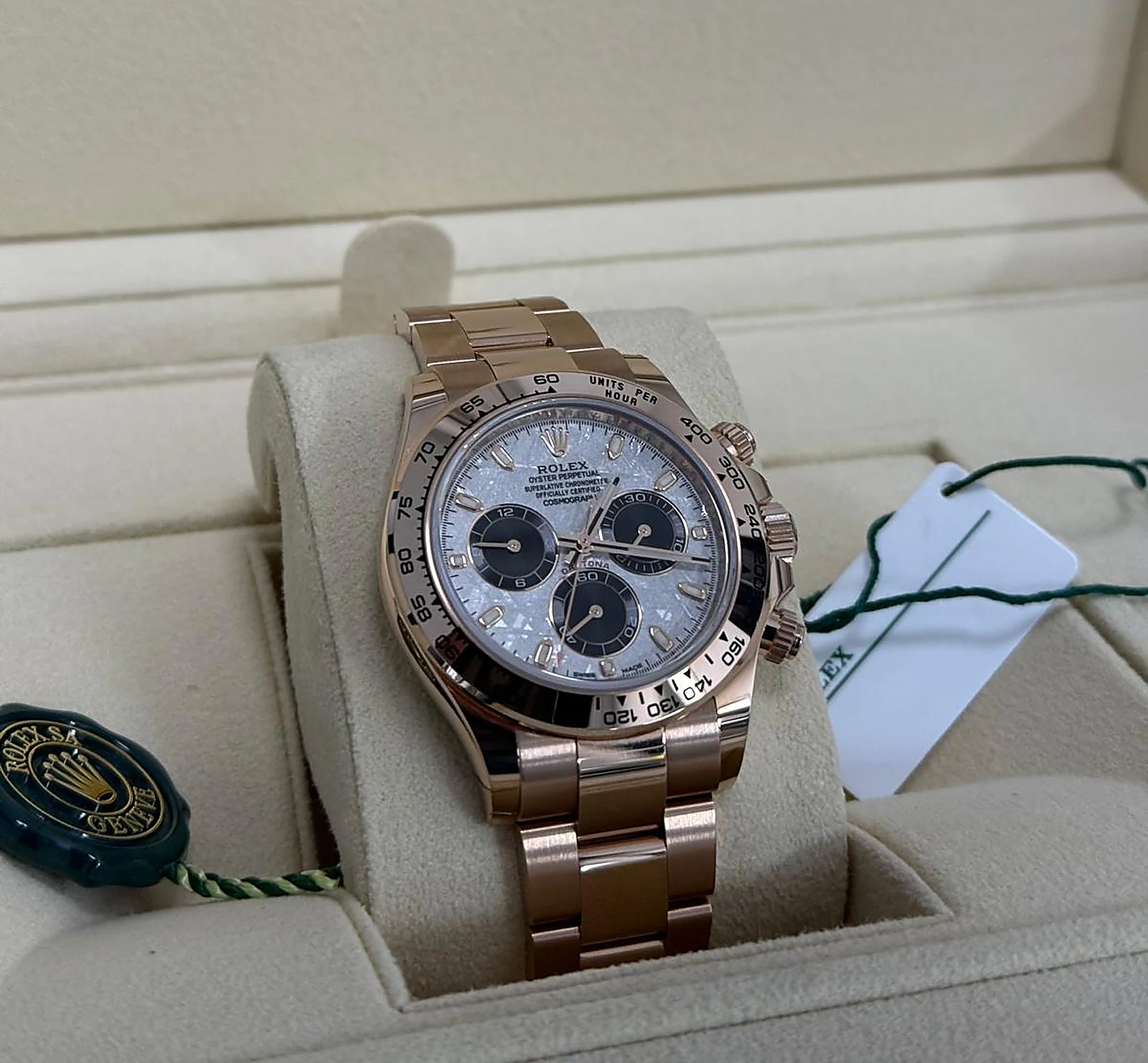
The short answer: selling raises more up front and ends your connection to the watch. Borrowing raises less, costs interest, and returns the watch when the loan is repaid. Borrowing only makes sense when you want that particular watch back. If you do not, selling and buying another later is usually cheaper. The arithmetic below shows where the line sits.
This is general information, not legal or financial advice. Where it states a legal position it names the jurisdiction, statute and section, and links the source.
The figures used throughout. Loans start at a minimum advance of $10,000 over terms of 3 to 12 months. A one-off $400 setup fee covers authentication and insured storage and is deducted from the advance, and interest runs from 5% to 10% per month. The maximum APR is 142%. Representative example: $15,000 over 3 months at 5% per month, with the $400 fee, is about $17,250 to repay over the term, with the fee deducted from the advance, an APR of about 73%. Full disclosure on the loan against watch page.
What is the difference between selling a watch and borrowing against it?
Selling transfers ownership: you are paid, the watch is ours, the transaction is finished. Borrowing transfers possession but not ownership, and that is a legal distinction rather than a marketing one. Section 6(19) of the National Credit Code, which is Schedule 1 to the National Consumer Credit Protection Act 2009 (Cth), defines the security in a pawn as a bailment "under which the title to the goods does not pass, conditionally or unconditionally, to the bailee". We hold the watch as security for the term, you keep title, and it comes back to you when the loan is repaid.
Both run through the same front end: you send the details, a certified watchmaker authenticates the watch, and payment goes by Osko once verified. Neither is faster than the other, because both wait on the same authentication.
What does it cost to borrow against a watch?
Selling costs nothing directly: the offer is net and the margin sits in the resale. Borrowing has a price, better seen in dollars than as a rate. Every figure below uses a $15,000 advance on the published terms: 3 to 12 months, a $400 setup fee, 5% to 10% per month, maximum APR 142%.
These are worked illustrations of the published parameters, not additional published rates. Your rate is set on assessment and confirmed in writing before any funds are released.
| Term | Rate | Cost of the loan | Total to repay | APR, nominal | Cost as a share of the advance |
|---|---|---|---|---|---|
| 3 months | 5% per month | $2,650 | $17,250 | About 73%, the representative case | 17.7% |
| 6 months | 5% per month | $4,900 | $19,500 | About 67% | 32.7% |
| 12 months | 5% per month | $9,400 | $24,000 | About 64% | 62.7% |
| 3 months | 10% per month | $4,900 | $19,500 | About 134%. The published maximum, 142%, is the same rate and term on the $10,000 minimum | 32.7% |
The last column decides the sell-or-borrow question, as the next section explains. Two things are easy to misread:
- Those APRs are nominal. They annualise simple monthly interest without compounding, which is how section 32B of the National Credit Code requires an annual cost rate to be expressed: as a nominal rate per annum, together with the compounding frequency. The published maximum APR of 142% is that figure, and the dollar totals above are calculated the same way as our published representative example.
- 142% is not an abstract ceiling. It holds while the published parameters do, because the fixed $400 fee shrinks against a larger advance or a longer term. A shorter term or a smaller advance would compute higher, which is why 142% is tied to the published minimum advance over the shortest term we offer.
Loans are written for a fixed term, and the full term's interest is payable however early you redeem: on a $15,000 advance at 5% per month over 3 months, redeeming after one month still costs the full $2,650 in interest and fees, 17.7% of the advance, the same as running the term. Choosing the shortest term that fits is what controls the cost. Our terms set that out.
When is borrowing cheaper than selling and buying another one later?
This is the question that decides it. Sell, and you hold the offer and no watch: wanting a comparable one later means buying it back for more than you were paid. Call that gap the round-trip premium. Borrowing beats selling and rebuying only when the loan costs less than the premium.
The loan cost is a known share of the advance, so the break-even premium is that share, the last column above. Over 3 months at 5% per month the loan costs 17.7%, so borrowing wins only if replacing the watch would cost more than 17.7% above the offer you turned down. Over 12 months at the same rate it costs 62.7%, more than half as much again. Read the other way, on a 20% premium a 3-month term at 5% per month costs 17.7% of the advance and borrowing wins, while at 10% per month the same term costs about 33%, so at the top of the rate range borrowing does not win unless replacement would cost more than about a third above the offer.
Two caveats, both of which cut against us:
- The premium is your number, not ours. We do not publish one, and we are not aware of a reliable published figure for the Australian market, so treat any precise dealer spread quoted as a statistic with suspicion. Work it out from real asking prices.
- The comparison is generous to borrowing. It treats the advance and the outright offer as one figure, and they are not: an advance is a percentage of assessed value, so in practice selling raises more than borrowing against the same watch.
The conclusion the arithmetic keeps producing: borrowing is not a cheaper way to raise money, it is a way to keep one particular watch. If the watch is replaceable to you, selling is the better decision, and our loan page says so too.
Which option suits which situation?
All figures as published above, including the maximum APR of 142%, the term range of 3 to 12 months and the representative example.
| What you are comparing | Sell it outright | Borrow against it |
|---|---|---|
| How much you receive | The full offer, which on the same watch is normally the higher figure. | A percentage of assessed value, so less than the offer. Advances from $10,000. |
| What it costs you | Nothing directly. The offer is net. | 5% to 10% per month plus the $400 fee, over 3 to 12 months. Maximum APR 142%. |
| Do you keep ownership of the watch | No, and there is no right to buy it back. | You keep ownership, not possession. Title stays with you, we hold the watch in secure insured storage for the term, and it is not worn, sold or offered for sale. It comes back to you when the loan is repaid. |
| If you cannot repay | Not applicable. | The watch is the only security, the debt is settled in full, we pursue no shortfall, and your credit file is not affected. Any surplus on a later sale is claimable for 12 months. |
What happens if I cannot repay the loan?
The watch is the security for the loan, and it is the only security. If the loan is not repaid by the end of the term, the debt is settled in full. We do not pursue you for any shortfall, the transaction is not reported to a credit reporting body, and your credit file is not affected. We assess the watch, not your credit file. That does not change, remove or hide anything already recorded on your credit file, and it is not a way around an existing credit problem.
What is not true, and what much American advice says, is that the pawnbroker then keeps everything. In Victoria, s23A of the Second-Hand Dealers and Pawnbrokers Act 1989 (Vic) gives the person who pawned the goods a right to the residual equity: if unredeemed goods sell for more than the outstanding amount of the loan plus the reasonable costs of sale, the person who pawned them may claim the difference for 12 months after the sale, and where that amount is $10 or more the pawnbroker must send a notice in the prescribed form within 14 days. Consumer Affairs Victoria puts the principle plainly: "Whenever there is residual equity, it is payable, regardless of the amount." New South Wales runs its own version in ss31 and 31A of the Pawnbrokers and Second-hand Dealers Act 1996 (NSW): the same 12 months to claim, a notice within 21 days, and no notice required where the amount is under $50. The states legislate separately, so the numbers should not be blended.
None of which makes not repaying a good outcome: you lose a watch you wanted to keep and paid interest for the privilege. It is a floor under the downside, not a plan.
Once the loan period expires we offer the watch for sale at the best price reasonably obtainable, as soon as practicable. For us that is a contractual commitment in our terms rather than a Victorian statutory duty, because the Victorian Act does not impose one. The wording is borrowed from New South Wales, where s30(1) requires a pawnbroker, once the principal lent exceeds the amount prescribed by the regulations, to sell unredeemed goods "in a manner conducive to securing the best price reasonably obtainable", and s30(4) puts the onus of proving compliance on the pawnbroker. We hold ourselves to it either way.
Why is an APR above 48% lawful on an Australian pawn loan?
Because a compliant pawn is not a credit contract. Section 32A(1) of the National Credit Code prohibits a credit provider from entering a credit contract where the annual cost rate exceeds 48%, and that is a real cap. But section 4 defines a credit contract as a contract under which credit is or may be provided, being the provision of credit to which the Code applies, and section 6(9) takes pawnbroking outside the Code. There is nothing for the cap to attach to.
Section 6(9) is narrow. It has three limbs, all of which must hold:
- The credit is provided on the security of pawned or pledged goods by a pawnbroker.
- It is provided in the ordinary course of a pawnbroker's business, being a business which is being lawfully conducted by the pawnbroker, which is what brings in the state registration and licensing requirements set out below.
- If the debtor is in default, the pawnbroker's only recourse is against the goods provided as security.
The third limb is why the non-recourse position is structural rather than generous. A pawnbroker who chased a borrower for a shortfall would fail it, fall back inside the Code and be capped at 48%. Nor is the exemption blanket immunity: s6(9) preserves sections 76 to 81, so a court can still reopen a transaction it finds unjust, and the Australian Consumer Law applies regardless.
None of that moves our own numbers. The published terms are the ones set out at the top of this page: advances from $10,000 over terms of 3 to 12 months, a $400 setup fee, interest of 5% to 10% per month and a maximum APR of 142%, with the representative example and the full disclosure on the loan against watch page.
Does American or British pawn advice apply in Australia?
Mostly it does not, and this is where Australians researching the question get misled. Local guidance is thin, so answers get assembled from American and British sources whose law differs in the ways that matter.
| What overseas advice says | Where it is true | The Australian position |
|---|---|---|
| "If you do not repay, the pawnbroker keeps it and that is the end of it." | Florida, where Florida Statutes s539.001(10) forfeits pledged goods to the pawnbroker 30 days after the maturity date, vesting absolute title by operation of law with no further notice. | Not the position here. The debt is settled, but you keep a claim on the upside: if the watch sells for more than the outstanding amount of the loan plus the reasonable costs of sale, you can claim the difference for 12 months after the sale, under s23A in Victoria and s31 in New South Wales. |
| "They can chase you for the shortfall if it sells for less than you owe." | The UK, where Consumer Credit Act 1974 s121(4) keeps the shortfall alive as a debt. | The opposite here. A pawnbroker with recourse beyond the goods loses the s6(9) exemption and falls back under the 48% cap. |
| "You automatically get six months to redeem." | The UK, under Consumer Credit Act 1974 s116(1). | No national minimum. Victoria has none at all. New South Wales sets three months under s29(1)(a), and s29(3) voids any term that shortens it. Ask what your term is. |
One more does not survive the trip. Selling something with a right to buy it back is not a way around a loan: s3(2) of the Victorian Act deems that arrangement a pawn. Paragraph (a) treats the money as advanced on the security of pledged goods, and paragraph (b) treats the sale price as the principal sum advanced and the difference between that and the repurchase price as the total amount of interest payable. Which is why a sale to us is final. An informal buy-back would not be a sale, it would be a loan.
Who regulates this, and who are we?
Pawnbroking is authorised state by state, not nationally. New South Wales licenses it under s6 of its Act. Victoria does not license pawnbrokers as such: s5(1) requires registration as a second-hand dealer and s5(1A) allows pawnbroking only where that registration carries an endorsement, which is why the Victorian number is a second-hand dealer registration with a pawnbroking endorsement rather than a pawnbroker's licence. The three Victorian regulators are Consumer Affairs Victoria, Victoria Police and the Business Licensing Authority. ASIC is not among them, because a compliant pawn sits outside the National Credit Code.
Buy Your Watch holds Victorian second-hand dealer registration with a pawnbroking endorsement, licence number SHD-0017882, ABN 85 670 502 315, and lends Australia wide. We compete on term length, 3 to 12 months, on the non-recourse structure, on specialist valuation and on insured storage. We do not compete on rate, and you should compare rates.
Ready to let the watch go? Start with a free valuation, and read where to sell a watch in Australia or who buys watches in Australia. Want it back at the end? Read the full loan terms, then apply for a loan. New to pawnbroking altogether? Start with how pawning a watch works in Australia. We will tell you which suits your situation, including when the honest answer costs us the loan.
If you decide to borrow, our full guide to how pawning a watch works in Australia walks through the whole transaction stage by stage, with the Victorian rules on registration, the pawn ticket, storage, redemption and what happens to an unredeemed watch.
Frequently Asked Questions
Should I sell my watch or borrow against it?
Sell if you are willing to part with the watch, because selling raises more and costs you nothing directly. Borrow only if you want that particular watch back, since a loan costs interest and a setup fee on top of returning the amount advanced. Put plainly, borrowing is not a cheaper way to raise money, it is a way to keep one specific watch.
Do I get more money selling my watch or borrowing against it?
Selling, on the same watch. An outright offer is the full figure, while an advance is a percentage of the assessed value, so in practice a loan raises less than a sale on the same watch. We do not publish a loan-to-value percentage, so ask for both numbers on your own watch before deciding.
What does it cost to borrow against a watch in Australia?
On our published terms, interest runs from 5% to 10% per month plus a one-off $400 setup fee, on advances from $10,000 over terms of 3 to 12 months, with a maximum APR of 142%. Representative example: $15,000 over 3 months at 5% per month is about $17,250 to repay in total, with the $400 fee deducted from the advance, an APR of about 73%. Loans are written for a fixed term, so the full term's interest is payable even if you redeem early.
What happens if I cannot repay a loan against my watch?
The watch is the only security, so the debt is settled in full, we do not pursue you for any shortfall, and your credit file is not affected. The watch is then offered for sale at the best price reasonably obtainable, as soon as practicable, which we commit to in our terms and conditions. If it sells for more than the outstanding amount of the loan plus the reasonable costs of sale, the difference is yours to claim.
If my watch sells for more than I owe, who keeps the difference?
You can claim it. Under section 23A of the Second-Hand Dealers and Pawnbrokers Act 1989 (Vic), the person who pawned the goods has 12 months from the sale to claim the residual equity, being the sale price less the outstanding amount of the loan and the reasonable costs of sale, and where that amount is $10 or more the pawnbroker must send a notice in the prescribed form within 14 days. Consumer Affairs Victoria states the principle as: whenever there is residual equity, it is payable, regardless of the amount. New South Wales runs its own version under sections 31 and 31A, with the same 12 months to claim, a notice within 21 days and no notice required below $50. This is the point American pawn advice most often gets wrong for Australian readers.
Does borrowing against a watch affect my credit file?
No. The watch is the only security and the transaction is not reported to a credit reporting body, which is why we assess the watch, not your credit file. It is not a way to change, remove or hide anything already recorded on a credit file, and it is not a way around an existing credit problem. This is general information rather than financial advice, so check your own position if it matters to you.
How can an APR of 142% be lawful when Australian law caps loans at 48%?
Because the 48% cap in section 32A of the National Credit Code applies to credit contracts, and section 6(9) takes a compliant pawn outside the Code altogether. That exemption only holds while the pawnbroker is registered, is acting in the ordinary course of a lawfully conducted pawnbroking business, and has no recourse beyond the pawned goods on default. Sections 76 to 81, which let a court reopen an unjust transaction, still apply. Our published terms are advances from $10,000 over terms of 3 to 12 months, a $400 setup fee and interest of 5% to 10% per month, with a maximum APR of 142%. Representative example: $15,000 over 3 months at 5% per month is about $17,250 to repay in total, with the $400 fee deducted from the advance, an APR of about 73%.
Can I sell my watch now and buy it back later?
Not as a sale. A sale to us is final and we do not offer a buy-back, and under section 3(2) of the Victorian Act a sale coupled with a right to repurchase is deemed a pawn anyway: paragraph (a) treats the money as advanced on the security of pledged goods, and paragraph (b) treats the sale price as the principal sum advanced and the repurchase margin as the total amount of interest payable. If you expect to want the watch back, a loan is the honest structure for it.