
Watch Loans
What Happens If You Cannot Repay a Watch Loan in Australia
The Australian law on not repaying a pawn loan, with the sections cited: the watch must be offered for sale rather than kept, you can redeem it right up until it sells, any surplus is yours to claim for 12 months, and a lender relying on the Commonwealth pawnbroking exemption cannot pursue you for a shortfall.
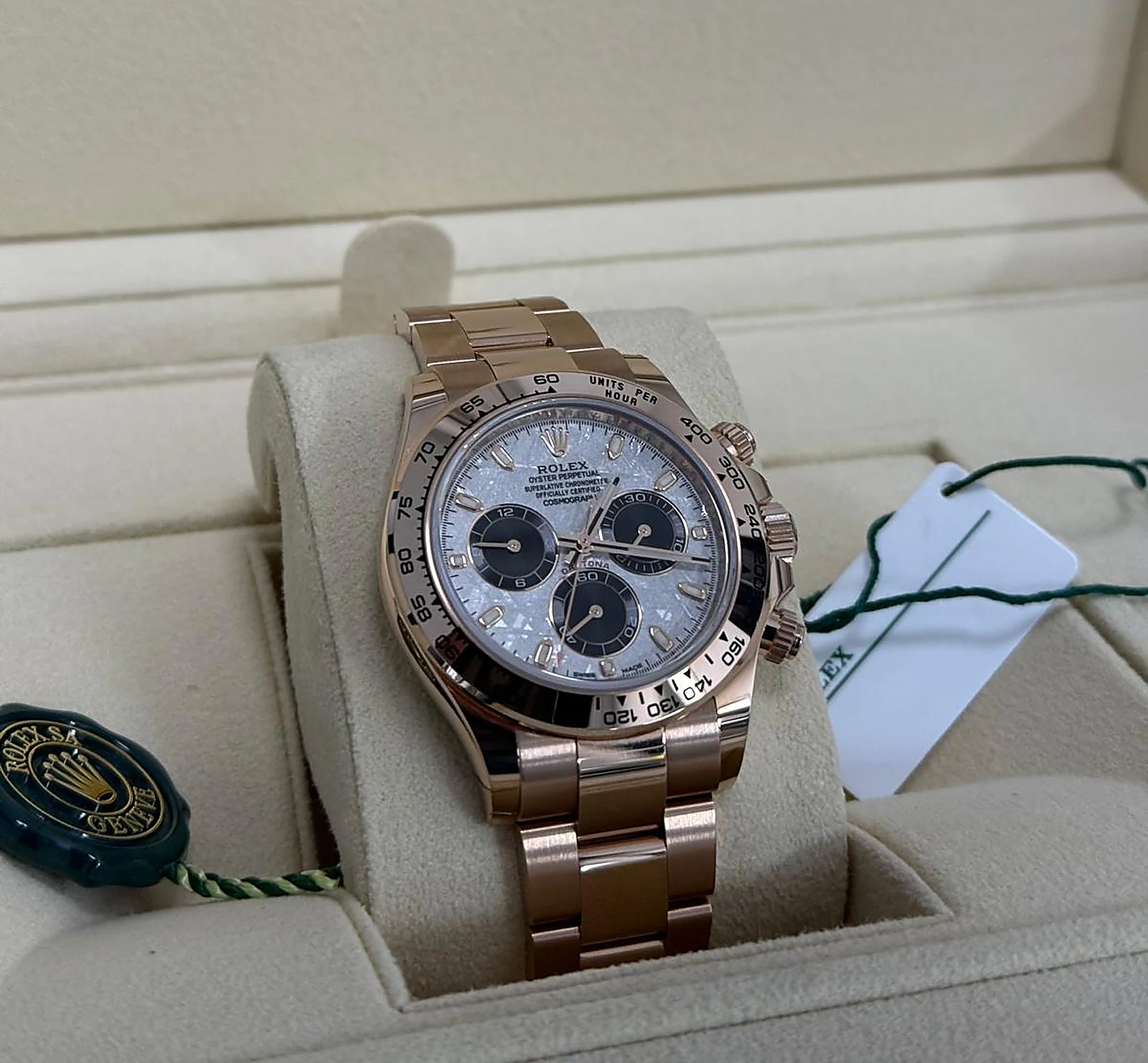
The short answer: the pawnbroker does not simply keep your watch. Under the Victorian pawnbroking regulations it must be offered for sale as soon as practicable at the best price reasonably obtainable, you can redeem it right up until it sells, and any surplus above what you owe and the costs of sale is yours to claim.
Most of what is written about pawnbroking online is American or British, and neither system works the way ours does, so Australians asking this question are usually given the wrong answer. What follows is the Australian position with the section numbers attached. If you are earlier in the process, start with our guide to how pawning a watch works in Australia. It is general information, not legal or financial advice, checked against the primary sources on 20 August 2026.
Does the pawnbroker keep my watch if I do not repay the loan?
No, and in Victoria it is not permitted to. Under regulation 24(1) of the Second-Hand Dealers and Pawnbrokers (General, Exemption and Record-Keeping) Regulations 2018 (Vic), where a loan period expires without being extended and the goods are unredeemed, "the pawnbroker must offer the goods for sale as soon as practicable and so as to receive the best price reasonably obtainable". Regulation 24(3) adds that a pawnbroker must not buy goods pawned with it and left unredeemed, so it cannot sell the watch to itself. Each carries a maximum of 20 penalty units.
That duty is often attributed to the Second-Hand Dealers and Pawnbrokers Act 1989 (Vic) itself. It is not in the Act. It sits in the Regulations made under it. Consumer Affairs Victoria states the same position in plain English: the pawnbroker must offer the unredeemed goods for sale, at the best price reasonably obtainable, as soon as practicable, and must not buy goods pawned with them.
Can I still get my watch back after the loan period has ended?
Yes, at any time before it is sold. This is the part most people get wrong, and it matters most. Regulation 23(2) provides that a person who has pawned goods "may redeem the goods at any time before the pawnbroker sells or disposes of them despite the expiry of the period of the loan". Missing your redemption date does not end your right to the watch. Only the sale does.
Regulation 23(1) sets out how: pay the outstanding amount of the loan and produce the pawn ticket or a duplicate, plus evidence of identity under section 19(1) of the Act. Section 29(2) of the Pawnbrokers and Second-hand Dealers Act 1996 (NSW) gives a similar right for pawnbrokers licensed there, with one difference worth knowing: where the goods are consigned for auction, the right ends at consignment rather than at sale. The window is real but not open ended, because the pawnbroker must sell as soon as practicable. If you are past your date, call the same day.
Will I still owe money if my watch sells for less than the loan?
Under a properly structured Australian pawn loan, no, and not for the reason most assume. The Victorian and New South Wales pawnbroking Acts do not say a pawnbroker can never chase a shortfall. The protection comes from somewhere else: a Commonwealth exemption. Section 6(9) of the National Credit Code, Schedule 1 to the National Consumer Credit Protection Act 2009 (Cth), takes pawnbroking credit outside the Code, but only where it is provided in the ordinary course of a lawfully conducted pawnbroking business and "if the debtor is in default, the pawnbroker's only recourse is against the goods provided as security for the provision of the credit".
Limited recourse is a condition of the exemption, not a courtesy. A pawnbroker relying on section 6(9) has given up any claim against you personally, because pursuing you would take the loan outside it. Our terms and conditions say the same. The United Kingdom is the opposite: under section 121(4) of the Consumer Credit Act 1974, where the net proceeds of sale fall short of what redemption would have cost, the debt continues as a personal debt for the difference.
What happens if my watch sells for more than I owe?
You are entitled to the difference. Section 23A(2) of the Second-Hand Dealers and Pawnbrokers Act 1989 (Vic) entitles the person who pawned the goods, for 12 months after the sale, to claim the residual equity: the amount by which the sale price exceeds the outstanding amount of the loan, being the loan plus accrued interest less payments made, and the reasonable costs of sale. Consumer Affairs Victoria puts it plainly: whenever there is residual equity, it is payable, regardless of the amount.
Two protections sit around it.
- A notice must be sent to you. Where the residual equity is $10 or more, section 23A(3) requires a notice in the prescribed form within 14 days of the sale, and Schedule 4 to the Regulations requires that form to itemise the sale price, the amount of the loan, the accrued interest, the payments you made and the reasonable costs of sale, so you can check the arithmetic. Failing to send it is an offence.
- It is a debt, not a request. Section 23A(5) requires payment on demand where you ask within the 12 months, and section 23A(4) makes the residual equity a debt due, recoverable in a court of competent jurisdiction.
Two things work against you. The notice goes to the last address you gave, so an unreported change of address is how people miss out. And Victorian law contains no provision stopping interest when the loan period ends, so the longer an unredeemed loan runs the smaller the residual equity becomes.
Will not repaying a watch loan affect my credit file?
Not with us, and the reason is structural rather than a rule of privacy law. If the debt is discharged when the watch is sold and there is no shortfall to pursue, there is no default to report, and it does not appear on your credit file. It is also why we assess the watch, not your credit file. It does not change, remove or hide anything already recorded on your credit file, and it is not a way around an existing credit problem. None of that means non-repayment is consequence free. You lose the watch.
How quickly can the watch be sold, and will I be warned first?
There is no statutory waiting period after your loan period ends. Section 21(1) of the Victorian Act does require a pawnbroker to keep goods in the form in which they were received and not dispose of them for 7 days, but that 7 days runs from when the goods are received, not from when the loan expires, and its purpose is helping police trace stolen goods. On a loan of several months it is long spent by the time a redemption date passes. What governs the timing instead is regulation 24(1): the watch must be offered for sale as soon as practicable and so as to receive the best price reasonably obtainable. That is a duty to sell properly, not a licence to sell the moment a date passes, but it is not a delay you can plan around.
Notice is the uncomfortable part. Victorian law requires no warning before a sale. The prescribed rights notice a pawnbroker must hand you, set out in Schedule 3 to the Regulations and published by Consumer Affairs Victoria as What are my rights when I pawn goods?, says in terms that if you do not repay your loan in time, the pawnbroker can sell your goods without telling you. The statutory notice comes after the sale. If a lender says it will contact you first, get that into your agreement rather than relying on the statute.
What do overseas guides get wrong about Australian pawn loans?
Three beliefs, each reasonable somewhere else and wrong here.
- "If you do not repay, they keep it." True in Florida, where under section 539.001(10) of the Florida Statutes pledged goods not redeemed within the 30 day period following the maturity date are automatically forfeited to the pawnbroker, absolute title vests by operation of law, and no further notice is necessary. Not in Victoria, where they must be offered for sale.
- "There is a 30 day rule", or "a six month minimum". Thirty days is the Florida forfeiture window. Six months is the United Kingdom minimum: section 116(1) of the Consumer Credit Act 1974 provides that a pawn is redeemable at any time within six months after it was taken. Australia has no national minimum. Victoria sets none at all, because regulation 22 requires only that the period of the loan be fixed at the time the goods are pawned. New South Wales sets a 3 month minimum under section 29(1)(a) of its Act, and section 29(3) makes any provision purporting to cut that period down of no effect.
- "Pawnbrokers are licensed nationally, by ASIC." Licensing is state by state, through Consumer Affairs Victoria, NSW Fair Trading and their equivalents. ASIC administers the National Credit Code, which by section 6(9) does not apply to qualifying pawnbroking.
The four jurisdictions side by side
The same five questions, answered under each system, with the provision that answers them. Read the Victorian column first, because it is the one that governs a loan from us.
| If the loan is not repaid | Victoria | New South Wales | United Kingdom | Florida, United States |
|---|---|---|---|---|
| Redeem after the term ends? | Yes, until the pawnbroker sells or disposes of the goods (reg 23(2)) | Yes, until sold, or until consignment where the goods go to auction (s29(2)) | Yes, until realised by the pawnee, unless property has passed on a pawn of £75 or less (ss 116(3), 120(1)(a)) | No, once 30 days have passed since the maturity date (s539.001(10)) |
| Can the pawnbroker keep it? | No. It must offer the goods for sale as soon as practicable and so as to receive the best price reasonably obtainable, and must not buy them itself (reg 24) | No, where the principal lent exceeds the amount prescribed by the regulations. It must then sell as soon as reasonably practicable in a manner conducive to securing the best price reasonably obtainable, and must not buy them (ss 30, 32) | Only where the redemption period is six months and the pawn is security for credit of £75 or less. Otherwise it must be sold, with notice first (ss 120(1)(a), 121(1)) | Yes. Absolute title vests in the pawnbroker by operation of law, and no further notice is necessary (s539.001(10)) |
| Notice about the sale | After it, within 14 days, where the residual equity is $10 or more (s23A(3)) | After it, within 21 days, unless the amount claimable is under $50 or the person asked in writing not to be sent one (s31A) | Before it, stating the asking price (s121(1)) | None required (s539.001(10)) |
| Right to any surplus | Yes. Claimable for 12 months after the sale and recoverable as a debt (s23A) | Yes. Paid on demand if claimed within 12 months of the sale (s31) | Yes. Any surplus is paid by the pawnee to the pawnor (s121(3)) | No surplus arises, because the goods are forfeited rather than sold on the pledgor's account |
| Shortfall if the sale falls short | None, where the pawnbroker relies on National Credit Code s6(9) | None either, where the pawnbroker relies on the same Commonwealth exemption. NSW law itself does not limit recourse to the goods | Survives as a personal debt for the difference (s121(4)) | None. A pawnbroker has no recourse against a pledgor except the pledged goods themselves (s539.001(14)) |
The other columns describe the law in those jurisdictions, not the terms of a Buy Your Watch loan. Buy Your Watch holds Victorian Licence SHD-0017882 and lends Australia wide, and what applies to your loan is in your agreement and our terms.
Is a pawn loan outside consumer credit law altogether?
No, and anyone saying otherwise has overstated the exemption. Section 6(9) expressly preserves sections 76 to 81 of the Code, under which a court may reopen an unjust transaction, and the Australian Consumer Law applies to how a lender describes its product.
The exemption is also why pawn pricing sits outside the Code's pricing rules. Section 32A of the National Credit Code prohibits a credit provider from entering into a credit contract with an annual cost rate above 48%, but that prohibition applies only to contracts the Code applies to, and a pawn loan within section 6(9) is not one of them. The trade in a pawn loan is a structural one: the borrower gives up the Code's protections on price, and gets in return a debt that cannot follow them and an asset that must be sold properly and accounted for. Our rates, the maximum annual percentage rate, the term range and a representative example are set out in full on the loan against your watch page.
What should I do if I know I cannot repay on time?
Four steps, in order of how much difference they make.
- Make contact before the end date, not after it. Once the period expires without being extended, the duty to offer the watch for sale is engaged, so ask about an extension before then. It is a matter for agreement rather than an entitlement, and it does not postpone the position indefinitely, because interest keeps accruing.
- Pay what you can. Payments reduce the outstanding amount of the loan, which is what comes off the sale proceeds, so every payment increases any residual equity.
- Consider selling the watch outright instead. If you know you cannot repay, that usually leaves you better off than a forced sale: you control the timing and the price, and you stop the interest. It costs us the loan to say so. Compare the routes in our guide to where to sell a watch in Australia, or get a figure through the free valuation form.
- Keep your address current and keep the pawn ticket. The post-sale notice goes to the last address held for you, and the ticket, or a duplicate, plus identification is what you need to redeem.
What happens if I cannot repay a loan from Buy Your Watch?
We are a licensed second-hand dealer and pawnbroker, Licence SHD-0017882, ABN 85 670 502 315, and we lend Australia wide. Every watch is authenticated by certified watchmakers before funds are advanced, held in insured storage for the term, and returned when the loan is repaid. If a loan is not repaid, the watch is the only security, the debt is settled in full, we do not pursue you for a shortfall, the watch is offered for sale at the best price reasonably obtainable, and any residual equity is yours to claim. Costs, including the maximum annual percentage rate, the term range and a representative example, are on the watch pawn loan page. The application form takes about five minutes.
This is general information, not legal or financial advice. It was checked on 20 August 2026 against the Victorian Act and its 2018 Regulations, the NSW Act, the National Credit Code, the Consumer Credit Act 1974 (UK), the Florida Statutes and Consumer Affairs Victoria guidance. Numbering in the Victorian Regulations may move when they are remade before they sunset in 2028.
For the full process on a Rolex from inspection to redemption, including the cost stated in one place, see our guide to pawning a Rolex.
Frequently Asked Questions
What happens if I cannot repay my watch loan in Australia?
The watch is sold and the debt is settled from the proceeds, rather than the pawnbroker keeping it. Regulation 24(1) of the Second-Hand Dealers and Pawnbrokers (General, Exemption and Record-Keeping) Regulations 2018 (Vic) requires unredeemed goods to be offered for sale as soon as practicable and so as to receive the best price reasonably obtainable, and regulation 24(3) prohibits the pawnbroker from buying them. You can still redeem the watch at any time before it is sold.
Can a pawnbroker keep my watch if I do not repay?
No, not in Victoria. Regulation 24(1) requires unredeemed goods to be offered for sale and regulation 24(3) prohibits the pawnbroker from purchasing them, each carrying a maximum of 20 penalty units. Automatic forfeiture of title is a United States model: under section 539.001(10) of the Florida Statutes, pledged goods not redeemed within the 30 day period following the maturity date are forfeited and absolute title vests in the pawnbroker by operation of law. That is not the Victorian position.
Can I get my watch back after the loan term has ended?
Yes, at any time before the pawnbroker sells or disposes of it. Regulation 23(2) preserves the right to redeem despite the expiry of the loan period. Section 29(2) of the Pawnbrokers and Second-hand Dealers Act 1996 (NSW) gives a similar right for pawnbrokers licensed in New South Wales, except that where the goods are consigned for auction the right ends at consignment rather than at sale. You redeem by paying the outstanding amount of the loan and producing the pawn ticket or a duplicate, plus identification.
Will I still owe money if my watch sells for less than the loan?
Not under a properly structured Australian pawn loan. Section 6(9) of the National Credit Code exempts pawnbroking from the Code only where, if the debtor is in default, the pawnbroker's only recourse is against the goods provided as security, so a lender relying on that exemption has no claim against you personally. The United Kingdom is the opposite: under section 121(4) of the Consumer Credit Act 1974 the shortfall continues as a personal debt. This is general information, not legal advice.
Do I get the money left over if my watch sells for more than I owe?
Yes. Section 23A of the Second-Hand Dealers and Pawnbrokers Act 1989 (Vic) entitles you to the residual equity, being the sale price less the outstanding amount of the loan and the reasonable costs of sale, claimable for 12 months after the sale and recoverable as a debt in a court of competent jurisdiction. Where the amount is $10 or more, the pawnbroker must also send you a notice in the prescribed form within 14 days of the sale, itemising the sale price, the loan, the accrued interest, your payments and the costs of sale.
Does not repaying a pawn loan affect my credit file?
Not with us, and the reason is structural. If the debt is discharged when the watch is sold and there is no shortfall to pursue, there is no default to report, and it does not appear on your credit file. It is also why we assess the watch, not your credit file. It is not a way to change, remove or hide anything already recorded on a credit file.
Does interest keep running after the loan period ends?
Victorian law does not stop it. Section 23A of the Second-Hand Dealers and Pawnbrokers Act 1989 (Vic) counts accrued interest in the outstanding amount deducted from the sale proceeds, and there is no Victorian provision ending interest at the end of the term, so the longer an unredeemed loan runs the less residual equity is left. New South Wales differs: section 32B(1) of the Pawnbrokers and Second-hand Dealers Act 1996 (NSW) provides that interest is not chargeable for any period after the end of the redemption period. What applies to your loan is set out in your agreement.
Is a sale with a right to buy the watch back the same as a pawn loan?
In Victoria, yes. Section 3(2) of the Second-Hand Dealers and Pawnbrokers Act 1989 (Vic) deems a buy back, being a sale under which the vendor is given a right to repurchase, to be a pawn: paragraph (a) treats the money as advanced on the security of pledged goods, and paragraph (b) treats the sale price as the principal sum advanced and the difference up to the repurchase price as the total interest payable. Structuring a loan as a purchase does not take it outside the pawnbroking rules.