
Selling Guides
Where to Sell a Watch in Australia: Every Option Compared
Specialist buyers, auction houses, consignment, private sale, pawnbrokers and marketplaces, compared honestly on price, speed, fees and risk, so you can pick the one that suits your watch.
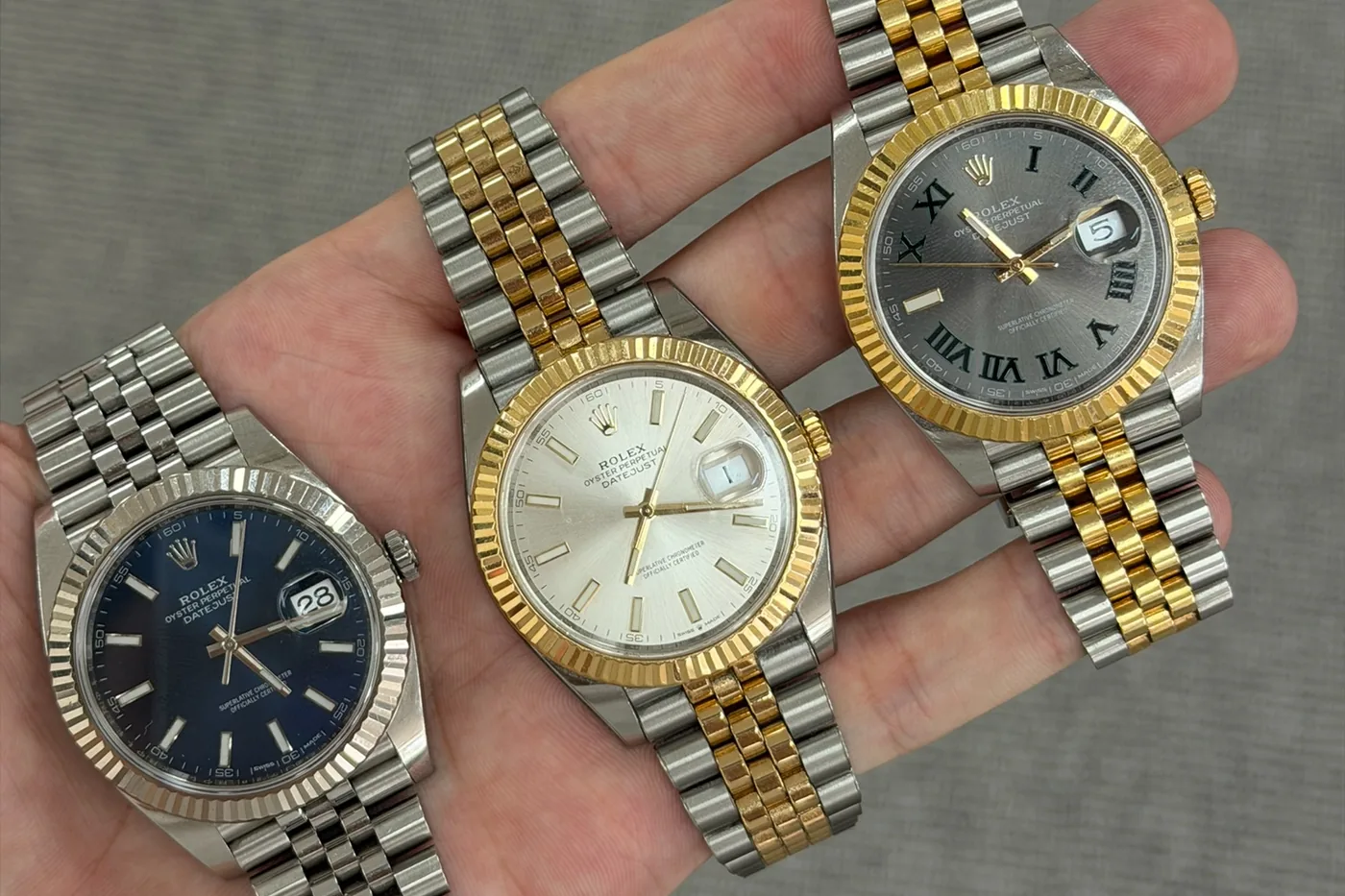
The short answer: in Australia you can sell a watch to a specialist watch buyer, through an auction house, on consignment with a dealer, privately to another collector, to a pawnbroker, or on an online marketplace. A specialist buyer is usually fastest and carries the least risk. An auction can reach a higher price on a rare piece but takes months and charges commission. Private sale keeps the most money in theory and carries the most risk in practice.
Which one is right depends on three things: what the watch is, how quickly you need the money, and how much risk you are willing to carry. This guide goes through all six options with the trade-offs stated plainly, including the ones that cost us business.
The six ways to sell a watch in Australia
1. Specialist watch buyers
A specialist buyer purchases the watch outright. You send details and photos, receive a valuation, the watch is authenticated in person, and you are paid directly. There is no commission taken out of your price, because the buyer makes their margin on the resale rather than on a fee.
Typical timeframe: one to three days from first contact to payment.
What it costs you: nothing directly. The offer is net.
Best for: mainstream luxury references where the market price is well established, and anyone who wants certainty and speed.
The honest downside: a specialist buys to resell, so the offer sits below full retail. If your watch is genuinely rare and you can wait, an auction may beat it.
2. Auction houses
Your watch is catalogued and offered to bidders. Auction is where genuinely rare, complicated or historically significant watches find their true ceiling, because the right two bidders in the room can push a price well past any dealer offer.
Typical timeframe: two to six months, depending on the sale calendar.
What it costs you: a seller's commission, and often photography, insurance and cataloguing fees. Buyers also pay a premium on top, which suppresses what they are willing to bid.
Best for: rare references, unusual dials, complications, provenance, anything hard to price.
The honest downside: a watch that does not meet reserve is "bought in", and a publicly unsold lot is harder to sell afterwards. You also carry the wait and the uncertainty.
3. Consignment with a dealer
The dealer displays and sells your watch on your behalf and takes a percentage when it sells. You usually get more than an outright offer, because the dealer is not carrying the money risk.
Typical timeframe: weeks to many months. It sells when it sells.
What it costs you: a commission on the sale price.
Best for: sellers who are not in a hurry and want more than an outright offer.
The honest downside: your watch is out of your possession, unsold, for an open-ended period, and you are exposed to the dealer's solvency for that whole time. Get the consignment terms in writing, including who insures it.
4. Private sale
Selling directly to another enthusiast, through a forum or a collector network, removes the middle party entirely. On paper this gets you the most money.
Typical timeframe: unpredictable.
What it costs you: no commission, but your time.
Best for: well-connected collectors selling to someone they already know.
The honest downside: this is where most of the money is lost in Australia. You are meeting strangers with a valuable object, and you carry the payment risk yourself. Reversed transfers, fake bank confirmation screenshots and cheque fraud are all common. If you do sell privately, meet inside a bank branch and release the watch only once funds are cleared and irreversible, not merely "sent".
5. Pawnbrokers and second-hand dealers
A licensed pawnbroker will buy a watch outright or lend against it. Borrowing is the point of difference: you keep ownership and get the watch back when the loan is repaid.
Typical timeframe: same day.
What it costs you: outright offers are generally lower than a specialist watch buyer's, because a general pawnbroker prices for the risk of a category they may not know deeply.
Best for: speed, and for people who do not actually want to part with the watch. If that is you, pawning your watch with a specialist is worth understanding before you sell it.
The honest downside: a generalist will usually value a luxury watch below a specialist, because it is not their core market.
6. Online marketplaces
Listing on a marketplace reaches the largest audience. It also reaches the largest number of people who are not serious.
Typical timeframe: unpredictable.
What it costs you: listing and payment-processing fees, plus your time filtering enquiries.
Best for: lower-value watches where the effort is proportionate.
The honest downside: for a five-figure watch this is the highest-risk route. Chargebacks, item-not-as-described claims and payment reversals can land weeks after the watch has gone.
Which option suits which seller
- You want it done this week: a specialist watch buyer.
- You have a rare or complicated piece and can wait months: auction.
- You want more than an outright offer and are patient: consignment.
- You already know your buyer personally: private sale, settled at a bank.
- You need funds but want the watch back: a loan rather than a sale.
- The watch is worth a few hundred dollars: a marketplace is proportionate.
What actually decides your price
Whichever route you choose, the same handful of factors set the number.
- Reference and model. Two watches from the same brand can differ enormously. A steel sports model and a dress model from the same year are different markets.
- Condition. Original, unpolished cases with sharp edges carry a premium. Over-polishing permanently removes value. Read our guide to watch condition grading before you have anything "tidied up".
- Box and papers. Not required, but they add value and speed the sale.
- Service history. Documented servicing by an approved watchmaker helps. A recent unnecessary polish does not.
- Originality. Aftermarket bezels, dials or diamond settings usually reduce value to a specialist buyer, even when they cost the owner a great deal.
How to avoid being underpaid
Get more than one valuation. Any credible buyer expects it and will not be offended. Beyond that:
- Check the buyer holds a second-hand dealer or pawnbroker licence, and that the licence number is published.
- Check the ABN is real and matches the trading name.
- Ask how payment is made, and when. Bank transfer on the day is normal. Payment "after we sell it" is consignment, not a sale, and should be described as such.
- Ask whether authentication happens before or after the offer is finalised. It should be before payment is released.
- Be wary of an offer given sight unseen that drops sharply once the watch is in someone else's hands. A preliminary range should be described as a range.
Selling in your city
Most Australian sellers are in a capital city, and each has its own market. We buy in all of them:
- Sell a watch in Sydney
- Sell a watch in Melbourne
- Sell a watch in Brisbane
- Sell a watch in Perth
- Sell a watch in Adelaide
- Sell a watch in Canberra
- Sell a watch in Hobart
- Sell a watch in Darwin
How selling to Buy Your Watch works
For transparency, here is our own process, so you can compare it against the options above rather than take our word for it. You send the details and photos through the online valuation form. We come back with a market-backed valuation. One of our certified watchmakers authenticates the watch in person. Payment is sent by Osko once it is verified, and most sales are complete within 24 to 48 hours. Buy Your Watch is a licensed second-hand dealer and pawnbroker, licence number SHD-0017882.
If your watch is rare enough that an auction would serve you better, we will say so.
Frequently Asked Questions
Where is the best place to sell a watch in Australia?
For most mainstream luxury watches, a specialist watch buyer gives the best combination of price, speed and safety, because there is no commission deducted and payment is immediate. For rare, complicated or historically significant pieces, an auction house can reach a higher final price, but it takes months and charges seller commission.
How much will I get for my watch compared to retail?
Any outright buyer pays below full retail, because they carry the cost of authentication, warranty risk and the time it takes to resell. The gap is narrowest on in-demand steel sports models with strong secondary demand, and widest on dress watches and discontinued models with thin demand.
Is it safe to sell a watch privately in Australia?
It carries the most risk of any option. You are meeting a stranger with a valuable item and you carry the payment risk yourself. Reversed transfers and fake payment confirmations are common. If you sell privately, meet inside a bank branch and hand over the watch only once funds have cleared and cannot be reversed.
Do I need the box and papers to sell my watch?
No. Original box and papers add value and make a sale faster, but a watch without them is still saleable. Authentication confirms whether a watch is genuine with or without its documentation.
How long does it take to sell a watch in Australia?
A specialist buyer typically takes one to three days from first contact to payment. Consignment and private sale are open-ended. An auction usually runs two to six months depending on the sale calendar.
Can I sell a watch if I want to keep it?
You can borrow against it instead. A licensed pawnbroker can lend against a watch while you keep ownership, and the watch is returned when the loan is repaid. That suits people who need funds temporarily rather than wanting to part with the piece.