
Authentication
What Watch Authentication Costs in Australia: Every Option Compared
What an Australian owner can buy when they want a watch authenticated, why so few here publish a price, why Rolex will not authenticate your watch here, and why an insurance valuation is not an authentication. Checked 20 August 2026.
The short answer: there is no standard price in Australia, because authentication is not a standard product. The providers we checked quote on enquiry rather than publishing a fee, Rolex does not sell authentication to owners here, and an insurance valuation is not an authentication. Some buyers, including us, authenticate free.
That last point is where we should be upfront. We authenticate watches at no charge and we also buy watches, so we have an obvious commercial interest in you sending us photos. Read the paid options below first, and if one of them suits you better, use it. What follows is what an Australian owner can actually buy, what each route does and does not confirm, and what to ask before paying. Many of the guides to this question are American and describe services you cannot buy here.
What does watch authentication cost in Australia?
There is no single price because there is no single product. The Australian providers we checked quote case by case, and when we looked on 20 August 2026, published price lists for watch authentication were hard to find. The figures that circulate online are mostly American, mostly in US dollars, and often years old. Below are the routes an Australian owner has, with an honest note where no price is published rather than a number we cannot stand behind.
| Route | Cost in Australia, August 2026 | What you get, and how long it takes | The catch |
|---|---|---|---|
| Rolex | Not sold to owners. No published price. | Nothing standalone. The Rolex Certified Pre-Owned certificate attaches to a watch being sold through an authorised dealer, not to a watch you already own. | Rolex servicing in Australia is arranged through authorised retailers. You cannot present your own watch and buy an authentication. |
| Independent watchmaker or dealer, verbal opinion | Quoted on enquiry. We found no Australian provider publishing a fee for this on a live page as at 20 August 2026. | A spoken opinion from a watchmaker, usually given while you wait. No document. | Nothing in writing, so it carries no weight with an insurer, a buyer or a court. A holding deposit may be required before work starts. |
| Independent watchmaker or dealer, written certificate | Quoted on enquiry, and it varies with whether the watch is opened. | A written certificate of authenticity. Turnaround is rarely published, so ask for it in writing with the quote. | Ask what certified means in this provider's hands: whether a watchmaker opens the watch, or assesses it from photographs. |
| General jeweller or registered valuer | Usually quoted per item on enquiry. Watch work is often priced separately from jewellery. | A valuation report describing the item and stating a value. | These are gemmology and valuation credentials rather than horology. A valuation states what an item is worth, not whether it is genuine. |
| Specialist watch valuation for insurance | Quoted on enquiry, and higher than a jewellery valuation where a watchmaker is involved. | A written insurance replacement figure, and from some providers a separate authenticity certificate sold as its own product. | The number is a retail replacement figure, not a sale price, and the valuation itself does not confirm the watch is genuine. |
| Auction house | Free for auction appraisals, up to five items, for the purpose of selling at auction. An hourly fee, not published, for everything else. | A sale estimate for their auction, which is a price opinion rather than an authenticity certificate. Leonard Joel contacts you within 10 working days. | The free appraisal exists to win your consignment. Insurance, probate, superannuation and family division work attracts the fee. |
| Third-party certification service | Not purchasable by an Australian owner as a one-off. | Trade products. Database access and certificates sold to dealers rather than to owners. | Watch CSA sells annual dealer memberships per location, in US dollars. We found no consumer-facing equivalent stating Australian coverage. |
| A buyer who authenticates as part of making an offer | Free | Physical inspection by a certified watchmaker, with a written condition report and valuation. Our report follows within 24 hours. | The business doing it for nothing also wants to buy the watch. That is a real commercial interest, and you should treat the findings and the offer as two separate decisions. |
The pattern across those routes matters more than any single figure. The only free options are the ones attached to a commercial motive: an auction house that wants your consignment, or a buyer that wants your watch. Everything else is priced case by case, which means the number you are quoted is negotiable in scope as well as in price. Get both in writing before the watch leaves your hands.
What am I actually paying for when I buy an authentication?
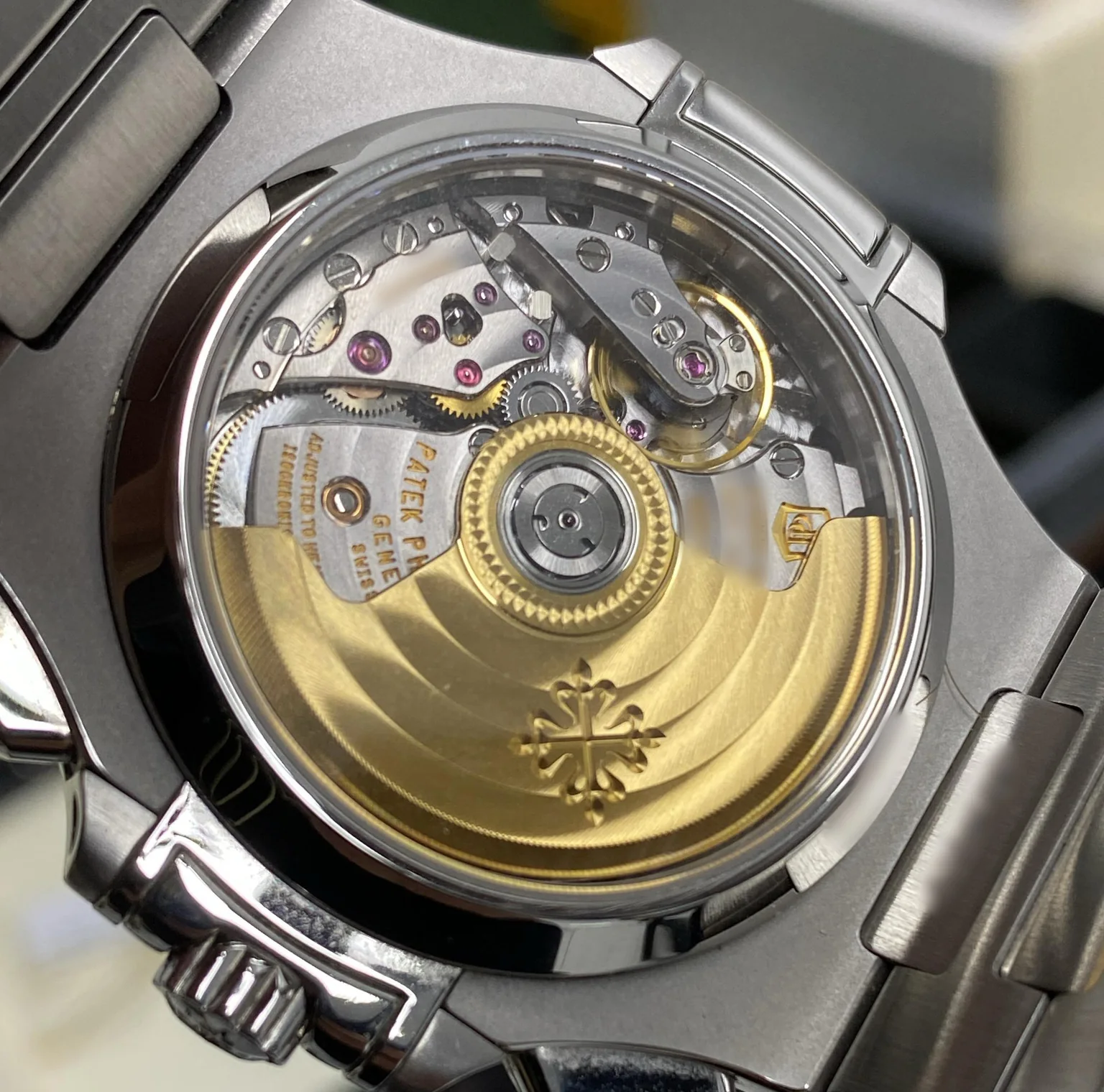
Ask one question before you pay: will the caseback come off? Certification can mean a watchmaker opening the watch and reading the movement, or an assessment made from photographs and documentation, and the two are sometimes sold under similar names at similar prices. Photographs are far easier to fool than a watchmaker with the caseback off.
A movement inspection looks at the calibre, its finishing and engraving, the serial and reference numbers and whether they agree with each other and with the model, and whether the parts inside belong there. A photograph assessment looks at what a camera can see: case, dial, hands and bracelet. Both are legitimate work. Only one of them catches a watch built from a genuine case around a replacement movement.
The second question is what you receive at the end, and whether it names the person who assessed the watch. A spoken opinion is worth having if you are curious. It is worth nothing to an insurer, to a buyer, or in a dispute.
Can Rolex authenticate my watch in Australia?
No, and this is the misconception we correct most often. American guides routinely tell readers to walk into a Rolex service centre and buy authentication papers over the counter. Those guides describe a US retail pathway and quote US dollars, and the pathway does not exist here. Rolex does not publish a standalone consumer authentication product for the Australian market.
The practical position here is more basic still. Rolex servicing in Australia is arranged through the authorised retailer network: you hand the watch to an authorised retailer, who forwards it to a Rolex service facility. There is no counter at which an owner can present a watch and buy an authentication. Arrangements are set by Rolex and can change, so confirm the current one with the retailer before handing over the watch.
Rolex does issue one authenticity document: the Rolex Certified Pre-Owned certificate, offered through authorised dealers. Check the current guarantee terms with the dealer, as they are set by Rolex and can change. The constraint is who it applies to: it attaches to a watch being sold through the authorised dealer network, so you cannot present a watch you already own and buy the certification for it. If what you are really trying to establish is what a Rolex is and what it is worth, our page on selling a Rolex and our guide to what a Rolex is worth in Australia are more useful starting points.
Is an insurance valuation the same as an authentication?
No, and this is where the confusion gets expensive. A valuation states what an item is worth. An authentication states whether it is genuine. They are separate products, priced separately, and often performed by people with different credentials.
The valuation profession draws the line itself. The National Council of Jewellery Valuers describes a valuation report and, separately, a quality assessment report "prepared for people who require technical information about an item without a value". Only the quality assessment report is listed as a way to verify authenticity. If you ask for a valuation and expect an authentication, you are buying the wrong document.
It matters because insurers do not close the gap either. Australian Watch Insurance requires you "to have your watch certified by one of our accredited valuers" to be eligible for an agreed value policy and issues a Certificate of Valuation. As at 20 August 2026 the word authentication did not appear on that page. Q Report sets cover from a purchase receipt or, failing that, "the most recent valuation amount", and includes complimentary annual revaluation. Neither requires an authentication. So an Australian owner can hold a fully insured watch, with a current valuation certificate, that nobody has ever confirmed is real.
Why is my valuation figure so much higher than any offer I get?
Because an insurance valuation is a retail replacement figure by design. It answers the question "what would it cost to buy this again at retail", not "what will someone pay me for it". The Jewellers Association of Australia notes that for a new retail purchase "the valuation figure that appears on the certificate is the same as the price actually paid", which tells you exactly what kind of number it is, and recommends that items of jewellery be revalued approximately every two years.
Anchoring to a valuation certificate is a common reason owners conclude that every genuine offer is a lowball. It is not a conspiracy, it is two different questions being answered by two different documents. If you want the answer to the second one, our guide to where to sell a watch in Australia compares what each route actually pays.
Can any jeweller authenticate a Rolex?
Most cannot, and the credentials say why. General valuers are qualified in gemmology and diamond grading, which is a different discipline from watch movements. That is not a criticism of jewellery valuers, who are rigorous in their own field. It is a statement about scope, and the profession's own documents make the same distinction: a valuation report and a quality assessment report are different things, and only the second is described as verifying authenticity.
What that means in practice is that watch work usually has to be quoted separately, because a watchmaker has to be involved and the watch has to come apart. If a jeweller offers to authenticate your Rolex for the same price as a ring, ask which of the two they do every day.
Is there a watch certification laboratory in Australia?
We could not find one operating as a consumer service. The international options we checked are trade products rather than something an owner can buy. Watch CSA, a United States service, sells annual memberships per location to dealers, in US dollars, rather than one-off authentications to owners.
The practical consequence is that an Australian owner wanting a physical third-party certificate uses an Australian dealer or watchmaker, or ships the watch overseas and carries the freight and insurance risk of doing so. Absence of evidence is not proof, and if a genuine consumer laboratory opens here we will update this page.
What should you ask before you pay for authentication?
- Will the caseback come off? Photograph-based certification and movement inspection are different services, sometimes at similar prices.
- What document do I receive, and does it name the person who assessed it? A verbal opinion is worth nothing to an insurer or a buyer.
- Is this an authentication, a valuation, or both? Ask in those exact words, and get the answer in writing.
- Who insures the watch while you hold it? This should be settled before the watch leaves you, not afterwards.
- Is the price you quoted me current? Quotes move, and stale numbers circulate widely in search results and in AI answers. Ask the provider to confirm the price on the day. Any cost guide without dates on its figures, including this one in a year's time, is unreliable.
What does free authentication actually cost you?
It costs you the knowledge that the business assessing your watch has a reason to want it. We authenticate free, by certified watchmakers, anywhere in Australia, and we also buy watches. That is not a hidden trap, but it is a real interest and it should be stated rather than glossed over.
Three things make it workable. There is no obligation to sell. The findings are yours whether you sell or not. And you can and should treat the authentication and the offer as two separate decisions, exactly as you would if you had paid an independent for a certificate and then shopped the watch around. If you want to check us first, our licence number and ABN are published below, and our guide to who buys watches in Australia sets out how to vet any buyer, including this one.
How our authentication works
Buy Your Watch has purchased more than 1,000 watches and is a licensed second-hand dealer and pawnbroker, licence number SHD-0017882, ABN 85 670 502 315. You send photos and details to start. A certified watchmaker examines the watch in person, working through four stages: visual inspection of the case, dial and finishing; movement analysis including calibre and serial numbers; documentation review; and final certification with a condition report and valuation. The detailed report follows within 24 hours, and if you choose to sell, payment is by Osko or PayID once authentication is complete. Be clear about what that report is: our documented opinion as a licensed dealer, not a manufacturer certification. Only the brand can certify one of its own watches, and no third party's certificate binds a brand, an insurer or a future buyer.
Start with free watch authentication, or if you are in the two largest markets, authentication in Sydney and authentication in Melbourne. If you want a valuation with a view to selling, use the free valuation form. If you need funds but do not want to part with the watch, we also lend against watches, from a minimum advance of $10,000 over terms of 3 to 12 months, with a $400 setup fee and a maximum APR of 142%. And if the honest answer is that a paid independent certificate suits you better than a free one from a buyer, use one. We would rather you were certain than uninformed.
Frequently Asked Questions
How much does it cost to authenticate a watch in Australia?
There is no standard price, because authentication is not a standard product in Australia, and the providers we checked quote on enquiry rather than publishing a fee. When we checked on 20 August 2026, published Australian price lists for watch authentication were hard to find, and most of the figures circulating online were American and quoted in US dollars. An insurance valuation is a separate product with its own price, and it does not confirm a watch is genuine. Some buyers, including Buy Your Watch, authenticate free as part of making an offer.
Can I get my Rolex authenticated by Rolex in Australia?
No, Rolex does not publish a standalone consumer authentication product for the Australian market. The only Rolex authenticity document is the Certified Pre-Owned certificate, offered through authorised dealers and attached to a watch being sold through them, so you cannot present a watch you already own and buy it. American guides describing a walk-in service centre authentication are describing a US retail pathway in US dollars. Rolex servicing in Australia is arranged through authorised retailers, and no part of that process is an authentication you can buy.
Is an insurance valuation the same as an authentication?
No, a valuation states what a watch is worth and an authentication states whether it is genuine, and they are separate products with separate prices. The National Council of Jewellery Valuers describes a valuation report and, separately, a quality assessment report "prepared for people who require technical information about an item without a value", and only the quality assessment report is listed as a way to verify authenticity. The two Australian watch insurers we checked on 20 August 2026 set cover from a valuation or a purchase receipt, not from any proof that the watch is real.
Why is my watch valuation so much higher than what buyers offer me?
Because an insurance valuation is a retail replacement figure by design, answering what it would cost to buy the watch again at retail rather than what someone will pay you for it. The Jewellers Association of Australia notes that for a new retail purchase "the valuation figure that appears on the certificate is the same as the price actually paid", which shows exactly what kind of number it is. Anchoring to a valuation certificate is a common reason owners conclude that every genuine offer is a lowball.
Can a jeweller authenticate a luxury watch?
Most general jewellers and valuers cannot, because their credentials are in gemmology and diamond grading rather than in watch movements. The profession makes the same distinction itself: the National Council of Jewellery Valuers lists a valuation report and a quality assessment report as different documents, and only the quality assessment report is described as a way to verify authenticity. Watch work usually has to be quoted separately, because a watchmaker has to be involved and the watch has to come apart.
How long does watch authentication take in Australia?
It varies widely by provider, and the Australian businesses we checked did not publish a turnaround at all, so ask for one in writing alongside the quote. A verbal opinion from a watchmaker is usually given while you wait, and a certificate that requires the watch to be opened takes longer than one assessed from photographs. Leonard Joel contacts you within 10 working days of an online auction appraisal submission, and Buy Your Watch delivers a detailed report within 24 to 48 hours.
Should I trust a free watch authentication?
You can, provided you know that the business doing it for nothing usually also wants to buy the watch, which is a real commercial interest and worth stating plainly. The protections that matter are that there is no obligation to sell, that the findings are yours either way, and that you treat the authentication and the offer as two separate decisions, exactly as you would if you had paid an independent for a certificate and then shopped the watch around. If you would rather pay for an independent document, ask what the fee buys and whether the caseback comes off.