
Watch Loans
How Does Pawning a Watch Work in Australia?
How a watch pawn works stage by stage: what the transaction legally is, who can lawfully take a watch in pawn, how the advance is set, the full cost, what the pawn ticket must show, and your rights if you cannot repay.
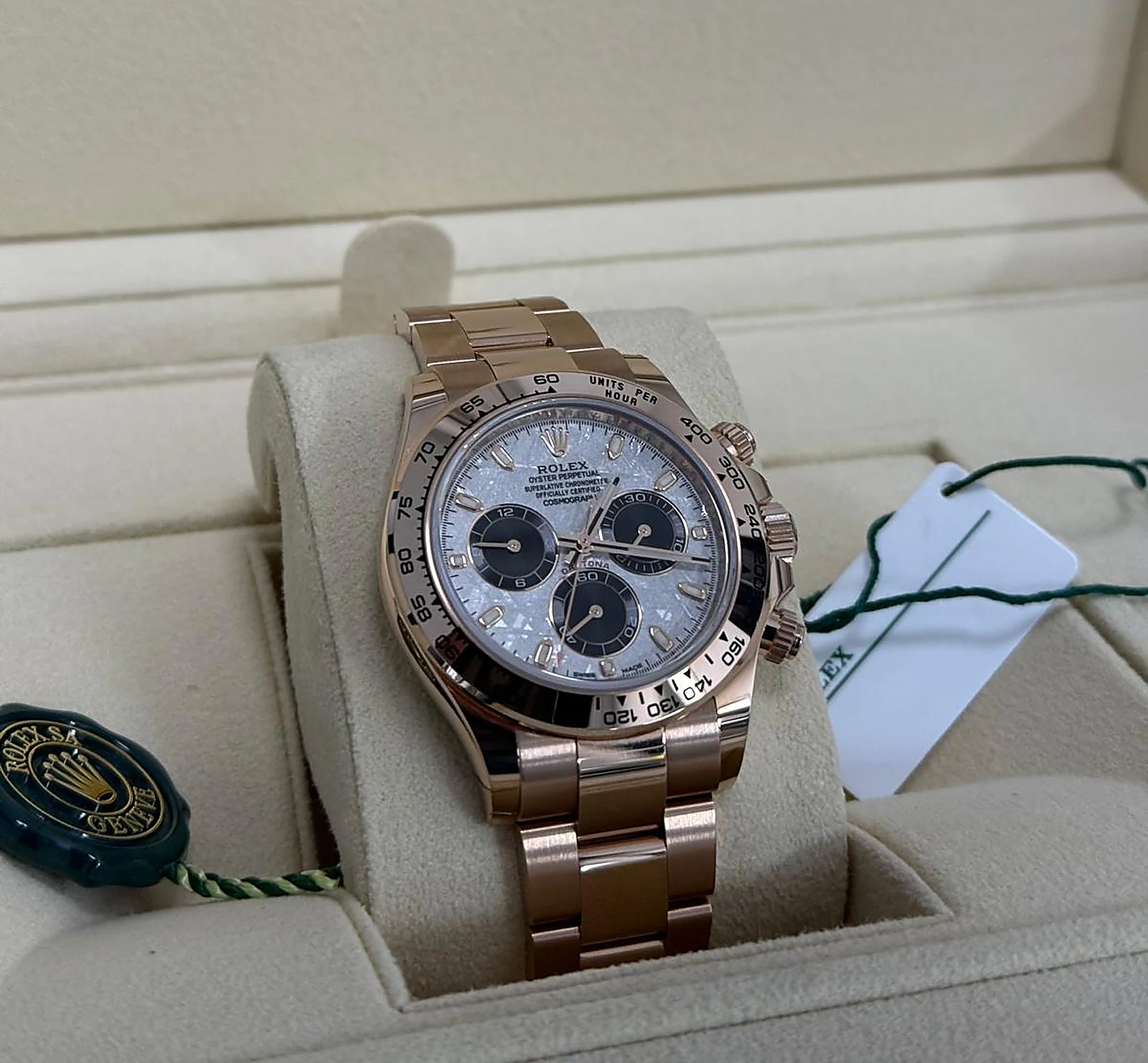
The short answer: pawning a watch means handing it to a registered pawnbroker as the only security for a fixed-term loan, and taking it back the day the loan is repaid. You stay the owner throughout. The pawnbroker identifies you, authenticates and inspects the watch, sets the advance against what it would realise if it had to be sold, gives you a pawn ticket and a written notice of the charges, and stores the watch. If the loan is not repaid the watch is sold rather than kept, and any surplus over the debt is yours to claim.
Summary
Pawning is the oldest form of secured lending and still the only one where the lender's entire remedy is the item on the counter. That single feature decides most of the rest: why your credit history is not assessed, why the cost is higher than ordinary consumer credit and lawfully so, and why the law imposes a detailed set of obligations on the pawnbroker instead. This guide follows a watch pawn from the first enquiry to either redemption or sale, with the Victorian position named section by section, because that is where Buy Your Watch is registered. It is written by a business that buys these watches and also lends against them, so it has an obvious interest in you choosing one of those routes; every legal claim below is checkable against the sources at the end. For the brand-level detail on the most commonly pawned watch, see our guide to pawning a Rolex in Australia.
Key takeaways
- You keep ownership. A pawn is an advance on the security of pledged goods, and in Victoria a sale with a right to buy the watch back is treated as a pawn too, so the protections cannot be avoided by relabelling the deal.
- The watch is the only recourse. That is the condition of the National Credit Code exemption a pawn loan relies on, and it is why there is no shortfall to chase and nothing to report to a credit reporting body.
- Pawnbroking is licensed state by state. In Victoria it needs a second-hand dealer registration carrying a pawnbroking endorsement, and the register is public.
- You must be given three documents: a pawn ticket, a written notice of the charges, and the prescribed notice headed "What are my rights when I pawn goods?"
- At Buy Your Watch the cost is stated once and completely: a minimum advance of $10,000, terms of 3 to 12 months, a $400 setup fee, interest of 5% to 10% per month depending on assessment, and a maximum annual percentage rate of 142%.
- You can redeem at any time after the seven-day minimum holding period and before the watch is actually sold, including after the loan period has expired.
- If the watch sells for more than you owe plus the reasonable costs of sale, the difference is yours to claim for 12 months.
Who this guide is for
An Australian who owns a luxury watch outright, needs money for a period they can see the end of, and expects to want the watch back. It does not say what any particular watch will borrow, because that depends on the watch in front of the pawnbroker, and it does not compare lenders on rate, for a reason given below.
How this guide was prepared
Every statutory claim below names the section or regulation it comes from and was checked on 23 September 2026 against the Second-Hand Dealers and Pawnbrokers Act 1989 (Vic), the Second-Hand Dealers and Pawnbrokers (General, Exemption and Record-Keeping) Regulations 2018, Consumer Affairs Victoria's guidance for the industry, and the National Credit Code in Schedule 1 to the National Consumer Credit Protection Act 2009 (Cth). The position given is Victorian, because Buy Your Watch holds its registration and endorsement in Victoria; other states run their own Acts, with their own numbering and redemption periods. Cost figures are Buy Your Watch's published terms on the same date. Nothing here is legal or financial advice.
The transaction at a glance
Each stage of a watch pawn has a rule attached to it. Here is the transaction up to the point the watch is stored, with the source for each; what happens at the end of the term is set out further down.
| Stage | What the law requires | Source |
|---|---|---|
| What the deal is | Money advanced on the security of pledged goods. A sale with a right to repurchase, a "buy back", is deemed a pawn. | Act, s 3 [1] |
| Which credit law applies | Outside the National Credit Code under s 6(9), but only while the pawnbroker's sole recourse on default is the goods. The unjust transaction provisions, ss 76 to 81, still apply. | National Credit Code [2] |
| Who may take it | Registration as a second-hand dealer plus a pawnbroking endorsement, with a penalty of 100 penalty units for trading without one. | Act, s 5 [3] |
| How you check them | A public register shows the registration number and date, any conditions, the ABN and the date of endorsement. | Consumer Affairs Victoria [4] |
| Outside Victoria | Each state runs its own scheme. In New South Wales, goods must generally be redeemed within 3 months of being pawned. | NSW Government [5] |
| Identification | Evidence of identity must be required, and the goods refused if it cannot be produced. | Act, s 19 [6] |
| What you are given | A pawn ticket, a written notice of the charges, and the notice headed "What are my rights when I pawn goods?" | Consumer Affairs Victoria [7], Schedule 3 [8] |
| What is recorded | Transaction number, description of the goods and identifying marks, your name and address, the identification produced, the amount, the charge, every payment, the loan period and the outcome. | Consumer Affairs Victoria [9] |
| Holding and storage | Goods kept in the form received, and not disposed of in any way, for seven days, with the storage location recorded. | Consumer Affairs Victoria [10] |
| Redemption | On the ticket, proof of identity and payment of what is outstanding, at any time after the seven days and before sale, including after the term expires. | Consumer Affairs Victoria [10] |
One thing stands out from that table: almost every obligation sits on the pawnbroker. Your side is short. Turn up with the watch and your identification, read what you are handed, keep the ticket, and repay before the watch is sold.
Understand what pawning a watch legally is
A pawnbroker is defined in Victoria as a person who carries on the business of advancing money on the security of pledged goods. [1] The word "security" does the work. You are not selling the watch, you are pledging it: possession moves for the term, ownership stays with you. That is why the watch comes back when the loan is repaid, and why an unredeemed watch has to be sold rather than kept.
Section 3 also closes the obvious loophole. Where someone receives goods under a contract of sale and gives the seller a right to repurchase them, commonly called a buy back, they are deemed to have advanced money on the security of pledged goods and received them in pawn, with the sale price deemed the principal advanced and the difference from the repurchase price deemed the interest. [1] So a business offering to "buy your watch with an option to buy it back" is running a pawn transaction in Victoria whatever the paperwork says.
The second structural feature is where the credit law lands. Section 6(9) of the National Credit Code takes credit provided on the security of pawned or pledged goods, by a pawnbroker in the ordinary course of a lawfully conducted pawnbroking business, outside the Code, on the express condition that if the borrower defaults the pawnbroker's only recourse is against the goods. [2] Two consequences follow as a package. Recourse is limited to the watch, so the pawnbroker cannot pursue you personally for any balance, and the Code's cap on the annual cost rate in section 32A, set at 48%, does not apply. A pawnbroker who reserved a right to chase you for a shortfall would be outside the exemption and inside the cap.
What the exemption does not remove is the court. The same section 6(9) preserves sections 76 to 81 of the Code, which allow a court to reopen an unjust transaction. [2] It takes away the price cap, not the supervision. A personal loan secured over a watch by a licensed credit provider is a different animal: inside the Code, capped at 48%, with the lender able to pursue you for a shortfall. Our guide to what happens if you cannot repay a watch loan works through the difference.
Check who can lawfully take your watch in pawn
In Victoria a person must not carry on business as a pawnbroker unless registered as a second-hand dealer and authorised to do so by an endorsement on that registration, with a penalty of 100 penalty units. [3] The Business Licensing Authority keeps a public register showing the registration number and date, any suspension or conditions, the director names, the ABN, business addresses and, for a pawnbroker, the date of the endorsement. [4]
Use it. Buy Your Watch's registration number is SHD-0017882 and our ABN is 85 670 502 315. Check the name on the register is the name on the loan agreement and on the account the funds arrive from, and check the endorsement is actually there, because a second-hand dealer registration without it authorises buying, not lending. A business that cannot give you a number is not a registered pawnbroker whatever it calls the arrangement, and none of the protections here are yours to rely on.
Pawnbroking is regulated state by state rather than nationally, so the detail changes across a border even though the shape of the transaction does not. New South Wales, for example, works on a redemption period of generally 3 months from the date the goods were pawned, with longer periods negotiated with the pawnbroker. [5] Ask which state a pawnbroker is licensed in and read that Act's rules rather than assuming the Victorian ones travel.
Know what the pawnbroker checks before advancing anything
A pawnbroker lends against what the watch would realise if it had to be sold, so the assessment is the one a buyer makes, plus an identity check the law requires.
- Your identity. A pawnbroker must require every person attempting to pawn goods to produce evidence of identity, and must refuse the goods if it cannot be produced. [6] That is a statutory duty, not a courtesy. The pawnbroker also needs to be satisfied the watch is yours to pledge: one still subject to a finance agreement, or held for a family member, is not.
- Authenticity. Every watch Buy Your Watch lends against is inspected by a certified watchmaker before funds are released. Our watchmakers in each Australian capital city are partner businesses rather than our own premises, and we say so. A pawnbroker willing to advance against a Patek Philippe or a Richard Mille without authenticating it is pricing that risk into your rate.
- Reference, serial and condition. These are read and recorded, and case, bezel, dial, hands, bracelet and movement are assessed exactly as for a purchase, because a worn watch realises less at sale and so borrows less. Our guides to Rolex serial and reference numbers and watch condition grading cover both.
- Documents. Box, warranty card or certificate of origin, service records and the original receipt all raise what the watch would sell for and therefore what can be advanced. A watch with no paperwork can still be pawned; it borrows against a lower figure.
Understand how the advance is set
The advance is a proportion of what the pawnbroker judges the watch would fetch if it had to be sold at the best price reasonably obtainable, less the cost of selling it. It is not the insurance value, not the retail price, and not what you paid. The proportion reflects how quickly and reliably that watch sells, so a current stainless steel sports model with its card and box borrows a higher share of its sale value than a discontinued precious-metal dress watch with no papers, even where the second would eventually sell for more. This is where a specialist and a generalist part company: a pawnbroker whose ordinary stock is jewellery and consumer electronics has no reliable way to price a five-figure watch and discounts the uncertainty, which comes out of your advance. Buy Your Watch's minimum advance is $10,000, so the watch has to be one that would clearly realise well above that at sale, and we lend against seven brands: Rolex, Patek Philippe, Audemars Piguet, Richard Mille, Cartier, Vacheron Constantin and F.P. Journe. The loan page explains the assessment and the application form takes about five minutes.
The full cost, stated once and completely
The cost of a loan belongs in front of you before you apply, not in a schedule produced at signing. Buy Your Watch's terms are these. Loans run from a minimum advance of $10,000 over terms of 3 to 12 months. A one-off setup fee of $400 covers authentication and insured storage for the term. Interest runs from 5% to 10% per month depending on the watch, the amount advanced and the assessed risk of the loan, and is paid monthly. The maximum annual percentage rate is 142%, which includes both the interest and the setup fee, and which applies at the highest monthly rate on the smallest advance over the shortest term. Because the setup fee is a fixed amount rather than a percentage, the annual rate works out lower on larger advances and longer terms.
Representative example: $15,000 advanced against a Rolex, over a 3-month term, at 5% per month, with the $400 setup fee deducted from the advance, so $14,600 is paid to you. Total repayable over the term, the monthly interest plus $15,000 to redeem the watch: approximately $17,250, an APR of approximately 73%.
Two things about the interest matter more than the headline rate. It is charged for a fixed term, so the full term's interest is payable even if you redeem early: pick the term you actually need. And it is paid monthly rather than rolled up, which keeps the amount needed on the redemption date down to the principal and the fee, and keeps the right to extend alive.
This guide does not set that cost against other lenders' rates, deliberately. A pawn loan is not a low-cost way to borrow money and is not presented as one. It is compared on what it offers: a fixed term, no recourse beyond the watch, nothing reported to a credit reporting body, insured storage, and the watch back the day you repay. Our comparison of selling your watch or borrowing against it is honest about when an ordinary loan is the better choice.
Read everything you are given, on the day
Consumer Affairs Victoria's guidance sets out three documents a pawnbroker must give a customer at the time of the transaction, with a maximum fine of 20 penalty units for failing to provide them. [7]
- The pawn ticket. It must show the name and address of the pawnbroker, the full name and address of the person the goods are received from, the date of the loan, the amount loaned, a description of the goods, the transaction number, the pawnbroker's charge, the period of the loan, and the amounts paid and dates of payment. [7] Check every line before you leave, and keep it, because the ticket is what you produce to get the watch back.
- A written notice of the charges for your transaction. The premises must also display a notice showing the maximum weekly or monthly charge in dollars. [7] A pawnbroker must not charge more than that displayed maximum unless the notice given to you states the reason and you agree in writing, with a copy of that agreement. [8]
- The prescribed notice, "What are my rights when I pawn goods?" This is the Schedule 3 notice under the Act: a plain-English summary of how to repay, how to claim the goods back, what identification you need, what happens if the ticket is lost, and what happens to money left over from a sale. [8] Keep it with the ticket.
One line in that notice is worth reading twice, because it is the most common surprise: if you do not claim the watch back by the end of the loan period, the pawnbroker can sell it without telling you. [8] There is no obligation to warn you first, so the date on the ticket is the date that matters and your own diary is the only reliable protection.
Behind the counter the same transaction is written into a record that must carry the transaction number from your ticket, a description of the goods including any identifying mark, your full name and address, the identification you produced, the date, the loan amount, the charge, the amount and date of every payment, the loan period, and what finally became of the goods. [9] Your ticket and that record are meant to agree, so correct an error on the spot, and make sure the serial number is in the description, because it is what identifies your watch as yours. At Buy Your Watch all of this sits alongside a written loan agreement stating the rate, the term, the redemption date and the total repayable, signed before any funds are released.
Know what happens to the watch while the loan runs
Pawned goods must be kept in the form in which they were received and without being disposed of in any way for seven days, and the pawnbroker must record the storage location of all goods in its possession or control, with fines of up to 20 penalty units for failing on either. [10] That seven-day period is a statutory floor, not your term: a pawn loan holds the watch for the agreed term and beyond, until the watch is redeemed or sold.
At Buy Your Watch the watch is held in insured storage for the whole term, and the $400 setup fee covers the authentication and that insurance. It is not worn, not displayed and not offered for sale while the loan is on foot. Ask any pawnbroker three questions before handing a watch over: where is it kept, is it insured for its full value, and who is the insurer.
Understand redemption, extension and the redemption date
You redeem the watch by producing the pawn ticket and proof of identity and paying what is outstanding under the loan and the unpaid charge. Redemption is available at any time after the seven-day minimum holding period and before the pawnbroker sells or disposes of the goods, expressly including after the loan period has expired. [10] The expiry of the term does not by itself cost you the watch. The sale does.
The identification standard for getting the watch back is in the Schedule 3 notice: one piece of photographic identification such as a passport or driver licence, or two without a photograph such as a birth certificate, health care card or marriage certificate. [8] If the ticket is lost or stolen the pawnbroker must give you a replacement on a statutory declaration to that effect plus the same proof of identity, so a lost ticket is a nuisance, not a disaster. [8]
Buy Your Watch's agreements also provide for extension one month at a time at the same rate, conditional on every monthly interest payment having been made when due, each extension confirmed in writing. A missed payment ends the right to extend and the sale provisions then apply from the redemption date. If you can see a month out that the date will be a problem, that is the moment to speak to the pawnbroker.
Know exactly what happens if you cannot repay
This is set out at length in our guide to what happens if you cannot repay a watch loan, and the essentials are worth knowing before you borrow.
Once the loan period expires without being extended and the watch is unredeemed, the pawnbroker must offer it for sale as soon as practicable and so as to receive the best price reasonably obtainable, and is prohibited from buying the goods itself. [11] That prohibition removes any incentive to lend low and hope you default, because the pawnbroker cannot take the watch into its own stock at the loan value. The watch is the only security, so the sale settles the debt whatever it fetches. Buy Your Watch does not pursue you for any shortfall, nothing is reported to a credit reporting body, and your credit file is not affected by the loan, the default or the sale.
If the watch sells for more than the outstanding loan plus the reasonable costs of sale, the difference is the residual equity and it is yours. Section 23A entitles the person who pawned the goods to claim it for 12 months after the sale and requires the pawnbroker to pay it on demand within that period, with a penalty of 20 penalty units for refusing. [12] Where the residual equity is $10 or more, a notice of sale advising you that you can claim the money must be sent within 14 days of the sale to the last address you gave, and Consumer Affairs Victoria's guidance is explicit that residual equity is payable whenever there is any, regardless of amount. [13] So claim it inside the 12 months, and tell the pawnbroker if you move, because the notice goes to the address on the record.
A registered pawnbroker in Victoria therefore cannot keep your watch, buy it from itself, come after you for money once it is sold, or withhold a surplus you have claimed. Any paperwork saying otherwise describes a transaction the Act does not permit.
Verify the pawnbroker, not just the offer
- The registration number, looked up on the public register, with the pawnbroking endorsement present. Buy Your Watch: SHD-0017882.
- The ABN on ABN Lookup, matching the registered name and the account the funds come from. Buy Your Watch: 85 670 502 315.
- Who authenticates the watch, and whether they are certified. Ours are certified watchmakers in every Australian capital city, partner businesses rather than our own premises.
- Where the watch is stored, who insures it and for how much.
- The cost in full and in writing before you commit: advance, term, monthly rate, fee, annual rate, total repayable and redemption date. A monthly rate quoted without the rest is half a quote.
- Whether the three documents will be issued. If the answer is vague, walk.
- Reviews with the dates showing. Ours are 4.9 from 64 Google reviews.
Want to know what your watch could borrow? Send the brand, model and a few photographs, with a note of what documents you hold. The assessment is free and has no effect on your credit file. Funds are released once the watch has been authenticated by our certified watchmakers, and the process takes 24 to 48 hours from submission to payment.
Decide between pawning the watch and selling it
Borrowing is the right route when you want the watch back and the need for money has an end date you can see. Selling is right when it does not, or when the cost of the loan over the term you need would exceed the gap between what you would receive now and what you would pay to replace the watch later. That comparison is done with the arithmetic in selling your watch or borrowing against it. A watch you could not replace at any sensible figure is usually worth more to its owner than its sale price, which argues for borrowing; one you would happily replace, or one facing an expensive service, argues for selling. Buy Your Watch does both under the same registration, and will say which it thinks fits, including when the answer costs us the loan.
Avoid the common mistakes
- Choosing the longest term to be safe. Interest is fixed for the term, so a 12-month loan redeemed in month four still carries twelve months of interest.
- Treating the redemption date as a soft deadline. The pawnbroker can sell an unredeemed watch without telling you first. [8]
- Not reading the pawn ticket before leaving. Fix an error on the spot.
- Missing a monthly interest payment. At Buy Your Watch that ends the right to extend. Set the payments up on the day you sign.
- Judging the loan on the monthly rate alone. Ask for the fee, the term, the annual figure and the total repayable together.
- Moving house without telling the pawnbroker. The notice of sale, and your route to any money left over, goes to the last address on the record.
If you would rather sell it
Buy Your Watch also buys outright, across the same seven brands we lend against, and a watch that would borrow well usually sells well. Where to sell a watch in Australia compares the routes. If you sell to us, payment is by Osko bank transfer once your watch has been authenticated by our certified watchmakers, and the entire process takes 24 to 48 hours from submission to payment.
On tax, keep it in proportion. Capital gains tax applies to a gain, most used watches sell at a loss, and which ATO category a watch falls into decides the treatment. Keep the receipt and the sale record for five years and put the question to a registered tax agent. The tax section of our complete guide to selling a Rolex in Australia has the detail. Pawning is not a sale, so the question does not arise while the watch is only pledged.
Pawning a watch with Buy Your Watch
Founded in Melbourne in 2023, Buy Your Watch Pty Ltd holds second-hand dealer and pawnbroker licence SHD-0017882, issued by Consumer Affairs Victoria, ABN 85 670 502 315, and lends against Rolex, Patek Philippe, Audemars Piguet, Richard Mille, Cartier, Vacheron Constantin and F.P. Journe watches Australia wide. We have bought more than 1,000 watches and our Google rating is 4.9 from 64 reviews. The loan terms are the ones above and on the loan page, with the watch as the only security, no effect on your credit file, insured storage for the term, and the watch back the day the loan is repaid. The full terms are in our terms and conditions and in the agreement you sign before any funds are released.
Pre-pawn checklist
- Brand, model, reference and serial recorded and photographed, with box, warranty card or certificate of origin, service records and receipt gathered
- Watch confirmed as yours outright: no finance owing, not held for anyone else
- Photographic identification ready, or two non-photographic documents
- Registration number looked up on the public register, endorsement confirmed, ABN matched to the registered name and the paying account
- Authentication and storage confirmed: who inspects the watch, where it is kept and who insures it
- Full cost in writing: advance, term, fee, monthly rate, annual rate, total repayable, redemption date
- Term chosen for the period actually needed, knowing interest is fixed for it
- Pawn ticket checked item by item against the agreement before leaving the counter
- Notice of charges and the "What are my rights when I pawn goods?" notice received and filed with the ticket
- Monthly interest payments set up for their due dates, and the redemption date in the diary with a reminder a month before
- Postal address confirmed with the pawnbroker, and updated if you move
This is general information, not legal or financial advice. Where it states a legal position it names the statute, regulation or section: the Second-Hand Dealers and Pawnbrokers Act 1989 (Vic), the Second-Hand Dealers and Pawnbrokers (General, Exemption and Record-Keeping) Regulations 2018 (Vic), and the National Credit Code in Schedule 1 to the National Consumer Credit Protection Act 2009 (Cth), each checked against the primary sources and Consumer Affairs Victoria's guidance on 23 September 2026. Other states regulate pawnbroking under their own Acts. Cost figures are Buy Your Watch's published terms on the same date.
Frequently Asked Questions
Can you pawn a watch without box and papers?
Yes. The box, warranty card or certificate of origin and service records raise what a watch would realise at sale and therefore what can be advanced against it, so a watch with no paperwork borrows against a lower figure. It can still be pawned, because a certified watchmaker authenticates the watch itself either way.
How long can you pawn a watch for in Australia?
There is no single national answer, because pawnbroking is licensed state by state. In New South Wales, goods must generally be redeemed within 3 months of the date they were pawned, with longer periods negotiated with the pawnbroker. Buy Your Watch's terms run from 3 to 12 months, fixed in writing before any funds are released. Under Victorian law you can redeem at any time after the seven-day minimum holding period and before the watch is sold, including after the loan period has expired.
Does pawning a watch affect your credit score?
Not with us, and the reason is structural. The watch is the only security, so if the loan is not repaid the debt is settled when the watch is sold, there is no shortfall to pursue and no default to report, and nothing appears on your credit file. We assess the watch, not your credit history. It does not change, remove or hide anything already recorded there.
Can I sell my watch at a pawn shop instead of pawning it?
Yes. A registered second-hand dealer can buy a watch outright as well as lend against it, and the two are different transactions: a sale is final, a pawn returns the watch when the loan is repaid. A generalist pawn shop usually values a luxury watch below a specialist buyer, because it is not their core market, so on a five-figure watch get a specialist figure before accepting a counter offer. We do both and will tell you honestly which suits your situation.
Do I still own my watch while it is pawned?
Yes. A pawnbroker in Victoria is defined as a person who carries on the business of advancing money on the security of pledged goods, so possession moves for the term while ownership stays with you. A sale with a right to buy the watch back is deemed to be a pawn under the same section, so the protections cannot be avoided by relabelling the transaction.
What does it cost to pawn a watch in Australia?
At Buy Your Watch: a minimum advance of $10,000 over terms of 3 to 12 months, a $400 setup fee covering authentication and insured storage, interest of 5% to 10% per month depending on assessment, and a maximum annual percentage rate of 142%. Representative example: $15,000 advanced against a Rolex, over a 3-month term, at 5% per month, with the $400 setup fee deducted from the advance, so $14,600 is paid to you. Total repayable over the term, the monthly interest plus $15,000 to redeem the watch: approximately $17,250, an APR of approximately 73%. Interest is fixed for the term and paid monthly.
What must a pawn ticket show?
Under Consumer Affairs Victoria's guidance the ticket must show the name and address of the pawnbroker, the full name and address of the person the goods are received from, the date of the loan, the amount loaned, a description of the goods pawned, the number of the pawn transaction, the pawnbroker's charge, the period of the loan, and the amounts paid and the dates of payment, updated with each payment. You must also be given a written notice of the pawnbroker's charges and the prescribed notice headed "What are my rights when I pawn goods?"
Can I get my watch back after the loan period ends?
Yes, right up until the watch is actually sold. Victorian law allows redemption at any time after the seven-day minimum holding period and before the pawnbroker sells or disposes of the goods, including after the loan period has expired, on production of the pawn ticket and proof of identity and payment of what is outstanding. Be aware that a pawnbroker can sell an unredeemed watch without telling you first, so the redemption date on the ticket is the date that matters.
What happens if I cannot repay a watch loan?
Once the loan period expires and is not extended, the pawnbroker must offer the watch for sale as soon as practicable and so as to receive the best price reasonably obtainable, and is prohibited from buying it itself. The sale settles the debt whatever the watch fetches: Buy Your Watch does not pursue you for any shortfall and your credit file is not affected. If the watch sells for more than the loan plus the reasonable costs of sale, section 23A gives you 12 months after the sale to claim the difference, and a notice of sale must be sent within 14 days where that amount is $10 or more.
Which watches can Buy Your Watch lend against?
Rolex, Patek Philippe, Audemars Piguet, Richard Mille, Cartier, Vacheron Constantin and F.P. Journe. The minimum advance is $10,000, which means the watch has to be one that would clearly realise well above that at sale. Send the brand, model and photographs and you will be told plainly whether it is a watch we can lend against, at no cost and with no effect on your credit file.
Sources and references
- Second-Hand Dealers and Pawnbrokers Act 1989 (Vic), s 3: definitions, including pawnbroker and deemed pawn on a buy back, AustLII
- National Consumer Credit Protection Act 2009 (Cth), Schedule 1, National Credit Code (ss 6(9), 32A, 76 to 81), AustLII
- Second-Hand Dealers and Pawnbrokers Act 1989 (Vic), s 5: second-hand dealers and pawnbrokers to be registered, AustLII
- Public register of second-hand dealers and pawnbrokers, Consumer Affairs Victoria
- Pawnbroking and secondhand dealers: your rights when you pawn goods in New South Wales, NSW Government
- Second-Hand Dealers and Pawnbrokers Act 1989 (Vic), s 19: identifying persons selling or pawning goods, AustLII
- Signs, notices and pawn tickets: second-hand dealer and pawnbroker obligations, Consumer Affairs Victoria
- Schedule 3 prescribed notice: What are my rights when I pawn goods?, Consumer Affairs Victoria
- Keeping records: second-hand dealer and pawnbroker obligations, Consumer Affairs Victoria
- Loan period, storage, disposal and redemption of goods, Consumer Affairs Victoria
- Second-Hand Dealers and Pawnbrokers (General, Exemption and Record-Keeping) Regulations 2018 (Vic), reg 24: sale of unredeemed goods, AustLII
- Second-Hand Dealers and Pawnbrokers Act 1989 (Vic), s 23A: return of residual equity in unredeemed goods that are sold, AustLII
- Residual equity: pawnbroker obligations, Consumer Affairs Victoria