
Selling Guides
The 7 Watch Brands We Buy, Ranked by How Fast Each Sells in Australia
Rolex, Cartier, Patek Philippe, Audemars Piguet, Richard Mille, Vacheron Constantin and F.P. Journe, ranked by how quickly and reliably each one resells here, what the published Swiss export data does and does not tell you, and why our offer is more conservative on the slower four.
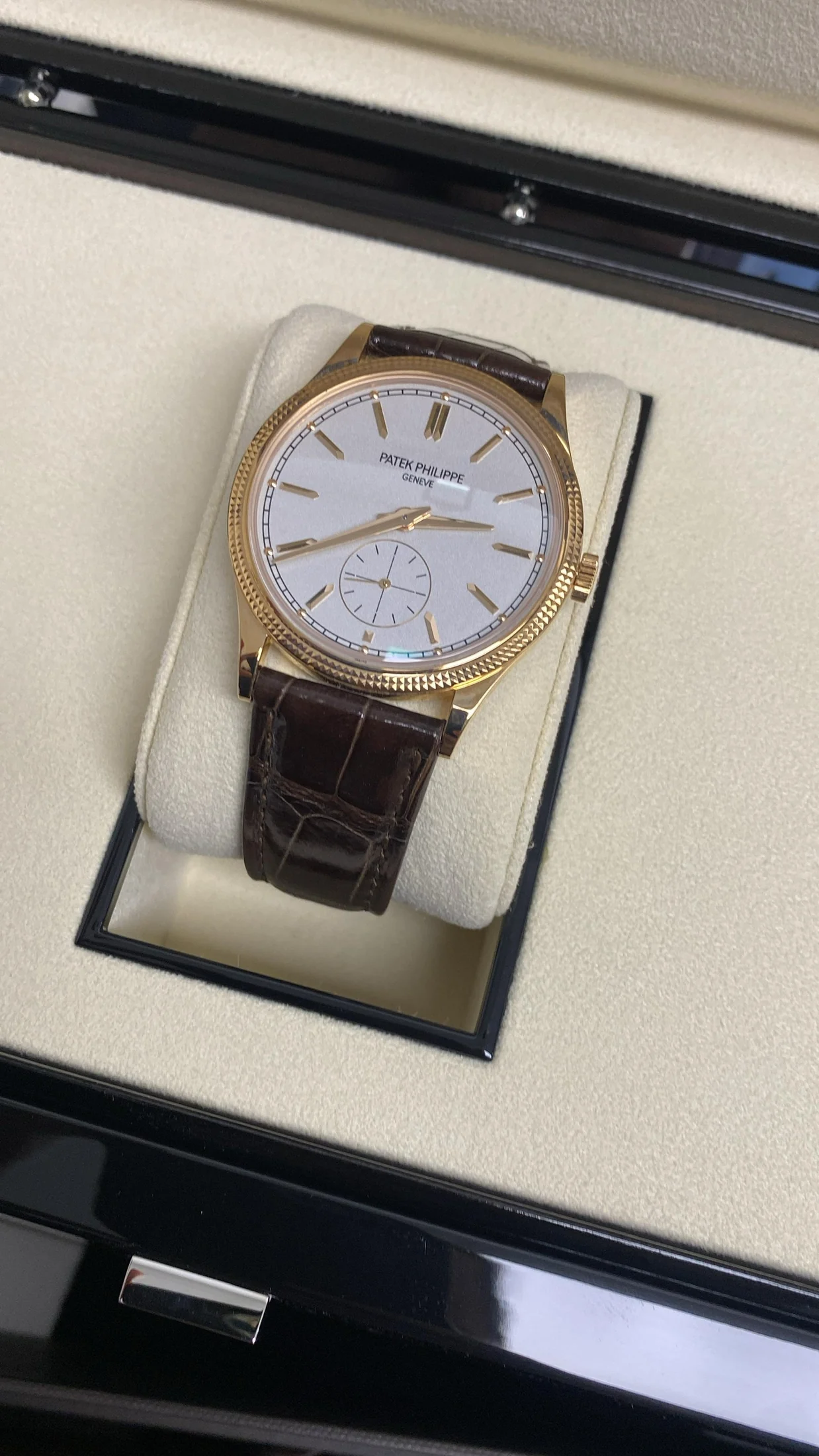
The short answer: of the seven brands we buy, Rolex is the fastest and most reliable to resell in Australia, followed by Cartier, then Patek Philippe. Audemars Piguet, Richard Mille, Vacheron Constantin and F.P. Journe are worth more per watch but take longer to place here, which is why we price them more cautiously.
This is a ranking we can stand behind, because we are the buyer. It measures one thing: how quickly and reliably an Australian buyer can be found for a watch once we have paid for it. That is liquidity, not value. Four of the seven brands we buy are genuinely harder for us to move here, and this explains which four and why.
What does this ranking measure, and what does it not?
It measures how readily a watch changes hands in Australia. A brand near the top is one we can price confidently and resell quickly, because local buyers already know what the reference is worth. A brand near the bottom is one where the buyer has to be found rather than advertised to, and is often overseas.
The order is our own experience of buying and reselling, not published data, and we have deliberately kept it qualitative. An earlier version of this article ranked these brands with value-retention percentages. No such figures are published for the Australian market, so they have been removed rather than restated, and you should treat any article that quotes them the same way.
It is not a ranking of value. A Richard Mille at number five is worth many times a steel Rolex at number one. It is not a prediction of future prices either. We do not publish forecasts, we are not licensed to give financial advice, and nothing here is a reason to buy anything.
How big is Australia's luxury watch market?
Nobody credible publishes that figure. The Australian Bureau of Statistics Retail Trade release reports turnover in six industry groups only: food retailing, household goods retailing, clothing, footwear and personal accessory retailing, department stores, other retailing, and cafes, restaurants and takeaway food services. There is no watch category, no jewellery category and no second-hand goods category. The market-size numbers quoted online for Australian luxury watches do not trace back to a primary source. We used to quote one on this page. We have removed it rather than replace it.
What is published, and downloadable in one click, is how many new Swiss watches arrive here. The Federation of the Swiss Watch Industry ranks Australia the 13th largest destination market for Swiss watch exports. Its full-year 2025 table, issued on 27 January 2026, puts Australia at CHF 424.9 million, up 3.5 per cent on 2024. Its January to July 2026 table, issued in August 2026, puts Australia at CHF 237.9 million for those seven months, up 3.1 per cent on the same period in 2025.
Read honestly, that supports one sentence: Australia is a mid-sized, steadily growing watch market by global standards. It counts new watches shipped in, not pre-owned watches changing hands, and it carries no brand breakdown. It cannot tell you what any brand resells for here. That is the gap this article fills from our own book.
Which of the seven brands sells fastest in Australia?
Ranked by how quickly and reliably we find an Australian buyer after purchase:
- Rolex. The deepest and fastest market in Australia by a wide margin, and the one brand where we rarely have to think about who the next owner is. Our guide to what a Rolex is worth in Australia goes reference by reference.
- Cartier. Far more liquid here than its reputation suggests, because a Cartier draws a jewellery buyer as well as a watch buyer.
- Patek Philippe. Deep and dependable at the top end, with modern wristwatches clearing readily and vintage pocket watches often not clearing at all.
- Audemars Piguet. Strong demand but very little public Australian supply, so the buyer is found through a network rather than a saleroom.
- Richard Mille. The highest value per piece of the seven and the smallest local buyer pool, frequently resold offshore.
- Vacheron Constantin. Appears rarely in Australia. The Overseas line moves, the dress references take patience.
- F.P. Journe. The rarest and slowest to place here, with the buyer almost always found outside Australia.
How do the seven compare side by side?
Everything in this table is our own experience of reselling these watches, not published data. The times are typical rather than promised, and one unusual watch can sit well outside them.
| Brand | References that move fastest here | Time to sell, in our experience | What most affects the offer |
|---|---|---|---|
| 1. Rolex | Datejust in every generation, Submariner, GMT-Master II, Explorer and Explorer II, Oyster Perpetual | Days. Often resold within the same week | Reference and bracelet, sharpness of the case edges, over-polishing, and whether the serial matches the card |
| 2. Cartier | Tank in all its variants, Santos, Panthere, Ronde | Days to a fortnight | Whether any diamond setting is factory or aftermarket, the metal, and the case size |
| 3. Patek Philippe | Nautilus, Aquanaut, Calatrava, Golden Ellipse | A week or two for core references, longer for dress models and pocket watches | Reference above all, then the certificate, service history and originality of the dial and case |
| 4. Audemars Piguet | Steel Royal Oak first, then Royal Oak Offshore | A couple of weeks, with the steel Royal Oak fastest | Papers, a complete bracelet with its spare links, and an unpolished case. All three matter more than on a Rolex |
| 5. Richard Mille | No single reference moves faster locally. These trade privately, and the buyer is usually offshore | Weeks, and often to an overseas buyer | The original certificate and a documented service history are close to mandatory, and originality is scrutinised harder than on any other brand here |
| 6. Vacheron Constantin | Overseas is the liquid line. Patrimony and Traditionnelle dress references are slower | Weeks. The Overseas fastest, gold dress references slowest | The line matters more than the brand. Documentation carries extra weight because local buyers see Vacheron Constantin rarely |
| 7. F.P. Journe | Chronometre Bleu, Chronometre Souverain, Octa, Tourbillon Souverain, Elegante | The longest of the seven. The buyer is usually found outside Australia | The original certificate and box, and which movement generation the watch carries |
Why are four of the seven slower to place here?
Supply, not desire. Australia sees very few Audemars Piguet, Richard Mille and F.P. Journe watches next to the number of Rolex and Cartier watches in circulation, and the ones that do change hands here move through specialist dealers and private networks rather than public salerooms. Those transactions leave no public record, so there is no price history for anyone to point at.
Public auction does not fill the gap either, because the dedicated watch calendar in this country is short. Leonard Joel, which runs a Fine Jewels and Timepieces department, showed only two sales carrying timepieces across the rest of 2026 when we read its published auction calendar on 20 August 2026: a dedicated Timepieces sale on 5 October and a Holiday Jewels and Timepieces sale in December. A handful of sales a year is not a market you can price a Royal Oak against.
What that means for you is practical. A valuation on those four leans on international comparables and on who the buyer turns out to be, rather than on recent local sales. It also means documentation carries more weight than it does on a Rolex: a buyer who sees the brand once a year wants the paperwork, and will pay for it.
Does a slower brand mean a lower offer?
Usually yes, relative to the international price, and we would rather say so than pretend otherwise. When we buy a watch we carry it as stock, warrant it to the next owner, and wait. On a steel Rolex that wait is measured in days and the price is well established, so our offer can sit close to the market. On a Richard Mille or an F.P. Journe we may hold the watch for weeks and ship it to an offshore buyer, and the offer reflects that.
That is the honest trade-off in an outright sale. If you own a rare or complicated piece and can wait months, an auction may beat any dealer offer, and we will say so. Our guide to where to sell a watch in Australia compares every route on price, speed and risk.
What matters more than the brand when we make an offer?
The reference, every time. A steel sports reference and a gold dress reference from the same maker sit in entirely different markets, and that gap is usually wider than the gap between two brands. Beyond it, four things move the number on all seven.
- Condition and originality. Sharp, unpolished case edges carry a premium. Over-polishing removes value permanently and cannot be undone. Read our guide to watch condition grading before you have anything tidied up.
- Aftermarket work. Non-factory diamond setting, replaced bezels and refinished dials reduce what a specialist will pay, even when they cost the owner a great deal.
- Documentation. Box and papers are not required, but they add value and shorten the resale, which matters most on the four slower brands.
- Service history. Documented servicing by an approved watchmaker helps. A recent cosmetic polish does not.
How do you get a valuation on one of these seven?
Send the details and photos through the free valuation form and we come back with a number and the reasoning behind it. One of our certified watchmakers authenticates the watch in person before payment is released, and payment is sent by Osko or PayID once it is verified. Most sales are complete within 24 to 48 hours, nationwide.
If you need funds but do not want to part with the watch, a loan against your watch leaves ownership with you: the watch is the security, it stays in insured storage for the term, and it comes back when the loan is repaid. The full cost of a loan, including the maximum APR, is set out on that page. If you are still working out who to deal with, who buys watches in Australia covers how to check a buyer before you hand anything over. Buy Your Watch is a licensed second-hand dealer and pawnbroker, licence number SHD-0017882, ABN 85 670 502 315, and we have bought more than 1,000 watches.
Frequently Asked Questions
Which watch brands sell fastest in Australia?
Of the seven brands we buy, Rolex sells fastest by a wide margin, followed by Cartier, then Patek Philippe, then Audemars Piguet, Richard Mille, Vacheron Constantin and F.P. Journe. That order is our own experience of buying and reselling in Australia, and it reflects how quickly a local buyer can be found rather than what a watch is worth. No published data ranks resale speed by brand in this market, so treat any article that puts a percentage on it with suspicion.
Why is Cartier ranked above Patek Philippe?
Because this ranks speed and reliability of resale, not value. A Cartier draws a jewellery buyer as well as a watch buyer, which widens the pool of people who will take one within a week. A Patek Philippe is worth far more per watch and, in our experience, takes a little longer to place. That is a statement about liquidity, not about quality.
Which of the seven is hardest to sell in Australia?
F.P. Journe. It is the rarest of the seven here and, in our experience, the buyer is almost always found overseas, which adds weeks and shipping to the process. Richard Mille is the next hardest and is also frequently resold offshore. Both are worth far more per watch than a steel Rolex, which is part of why they take longer: the pool of local buyers at that price is small.
Does the brand matter more than the model?
No, the reference matters more than the brand. A steel sports reference and a gold dress reference from the same maker sit in entirely different markets, and that gap is usually wider than the gap between two brands. It is why two watches with the same name on the dial can attract very different offers.
Will I get a lower offer on a brand that is slower to sell?
Usually yes, relative to the international price, and we will tell you when that is the case. An outright buyer carries the watch as stock, warrants it to the next owner and waits for a buyer, so a brand that takes weeks and an offshore buyer is priced more cautiously than a steel Rolex that resells within days. If your watch is rare enough that an auction would serve you better, we will say so.
Do I need the box and papers to sell one of these watches?
No, a watch without them is still saleable, and authentication confirms whether a watch is genuine either way. Documentation does add value and shortens the resale, and it matters most on Audemars Piguet, Richard Mille, Vacheron Constantin and F.P. Journe, where local buyers see the brand rarely and want the paperwork.
How much is the Australian luxury watch market worth?
Nobody credible publishes that figure, so treat any quoted number with suspicion. The Australian Bureau of Statistics Retail Trade release has no watch category, no jewellery category and no second-hand goods category. What is published is Swiss export data: the Federation of the Swiss Watch Industry ranked Australia the 13th largest destination market for Swiss watch exports in 2025, at CHF 424.9 million, up 3.5 per cent on 2024. That counts new watches arriving in the country, not pre-owned watches changing hands, and it carries no brand breakdown.
Can I raise money without selling my watch?
Yes, you can borrow against it instead. Buy Your Watch is a licensed pawnbroker, licence number SHD-0017882, and lends against watches on published terms: a minimum advance of $10,000 over terms of 3 to 12 months, a $400 setup fee covering authentication and insured storage, and interest of 5% to 10% per month depending on the assessment, with a maximum APR of 142%. As a representative example, $15,000 over 3 months at 5% per month totals about $17,250 to repay, with the $400 fee deducted from the advance, an APR of about 73%. You keep ownership throughout and the watch comes back when the loan is repaid.